What Are False Awakenings and How to Handle Them?
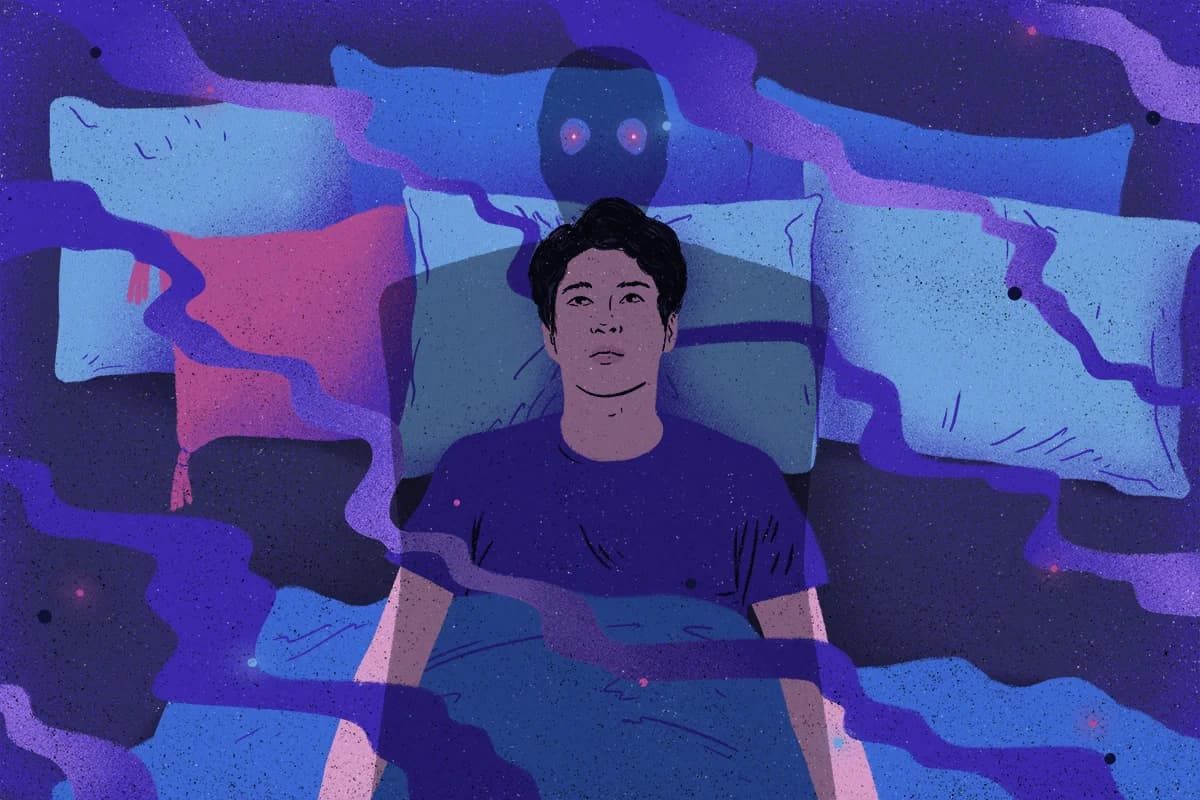
The day starts like any other. You wake up, get dressed, and grab your coffee, only to try and head out the front door and as you slam it behind you - you find yourself jolted awake, still in your bed. Slowly, you realize none of it was real. You were in a dream that felt like your waking life, with all the same characters and places. These eerie, disorienting, and sometimes disappointing phenomena are called false awakenings. While mostly harmless, they are more common than you'd think. So, why does your mind play these tricks? And more importantly, how can you stop them? Let’s break it down.
What is a False Awakening?#
A false awakening is one of the brain’s stranger tricks, where the lines between reality and dream become so blurred you could swear you’re awake. This phenomenon usually occurs between REM sleep - when your most vivid dreams happen - and wakefulness in the early morning. Scientists say it’s caused by disrupting the transition between REM sleep and wakefulness.[1] Instead of waking, you’re plunged into a dream that mirrors real life, often with stunning accuracy.
According to experts at the Sleep Foundation, false awakenings differ from all other dreams in that they are hyper-realistic. These dreams feel so convincing - they don’t feel like dreams at all. Unlike your typical “lucid dream” or “losing your teeth” dream, false awakenings mimic your world to the smallest details. Your alarm clock, bedroom, and conversations all seem as they should.
For scale, this whole family of experiences is far more common than people assume. A population survey of 1,000 adults in Norway found lifetime rates of around 67% for sleep talking, 66% for nightmares, 22% for sleepwalking and 10% for sleep terrors, with about 12% of people reporting five or more different parasomnias.[2] Odd things happening at the boundary of sleep is close to the human default.
False awakenings range from mildly annoying to psychologically unsettling. If they happen frequently, they can interrupt your sleep cycle, leaving you confused or groggy when you finally wake up. For most, these episodes are rare, but some experience them alongside other sleep phenomena like sleep paralysis. In these cases, false awakenings can start feeling like part of a larger pattern, which may require deeper exploration. Especially, if you’re caught in a false awakening loop.
It’s common to feel anxious, frustrated, or even stuck, when you’re constantly trying to wake up or sleep peacefully but never quite succeeding. For those who often push their brains to the limit (through work or personal stress), these dreams are a sign that your brain may struggle to switch off properly and that it is time to destress.
Types of False Awakening#
False awakenings generally fall into two categories, each with its unique characteristics.[3] These two types of false awakenings highlight how different dream experiences can be, even within the same phenomenon
- Type 1:
In a Type 1 false awakening, everything seems pretty normal. You might wake up and go through your usual morning routine. Brush your teeth, make breakfast, etc. The dream feels realistic, and there's no indication that you’re still dreaming. It isn’t until you wake up that you realize you were dreaming the entire time.
- Type 2:
In a Type 2 false awakening - things get a little weird. Scary even. You still feel like you’ve woken up, but something feels "off." Some have described it as a nightmare state. Maybe the room looks different. Or you notice unsettling things, like objects moving independently. Maybe there is a feeling of tension, fear, or frightening images. This version is more troubling because you think you're awake. You’re aware that something's wrong, leading to feelings of confusion or anxiety. While one feels like a regular day, the other might have you questioning your reality
Reasons for False Awakenings#
False awakenings can happen for several reasons, many of which are linked to your mental and physical state. Let’s break down some of the most common causes:
- Stress and Anxiety: Stress is a major culprit when it comes to false awakenings. High levels of anxiety trigger intense dreams as your brain stays hyper-alert despite being in REM sleep. This can make it nearly impossible to rest fully. The feeling of "waking up" in your dream may be your mind’s way of trying to regain control amidst the chaos of stress.
- Poor Sleep Quality: If you're not getting restful sleep regularly, your brain can struggle to transition smoothly between sleep stages. It's like how you lose a skill if you don’t practice properly. Sleep disorders like narcolepsy or insomnia can increase the chances of experiencing this phenomenon.[4] Your mind is trying to wake up to fall asleep, but it doesn't quite get there, leaving you in that in-between state.
- Sleep Paralysis: False awakenings are sometimes linked to sleep paralysis, where you wake up but can’t move your body. The two phenomena can overlap, creating a disturbing experience where you’ve woken up, but you’re still trapped in your body, unable to break free from sleep fully.
- Substance Use: Alcohol, recreational drugs, or medications can increase false awakenings. Alcohol may help you fall asleep quickly but disrupt REM sleep later on. Other substances, like stimulants or sedatives, can affect your brain’s ability to switch between sleep stages.
- Lucid Dreaming Attempts: People who practice lucid dreaming, where you become aware that you’re dreaming, may accidentally trigger false awakenings. The awareness of the dream state can sometimes make it harder to wake up, as your brain gets confused about when to stop dreaming and start waking.
What is a False Awakening Loop?#
A false awakening loop happens several times when you "wake up" into the dream state. It can be incredibly frustrating and make you feel stuck in a never-ending cycle of waking up and falling back into the hyper-realistic dream.
It can be stressful, but it's not hopeless. In a false awakening loop, we can’t tell when we are awake and what is just another loop. To break this, do a reality check - like reading the time - whenever you are unsure. Reality checks are a trusted lucid dreaming technique that can help you gain control over your dream world and break the cycle. To dive deeper, read our blog on How to Make Your Reality Checks More Effective.
Common Dreamed Activities During False Awakenings#
During false awakenings, you might do normal things for a typical day or face subconscious fears in familiar environments. Here are some common activities dreamers experience:
In Type 1, everything feels normal, and you carry out typical activities, unaware you're still dreaming.
- Getting Ready for the Day: Many people start their morning routine, brushing their teeth or getting dressed, unaware they’re still asleep. Everything feels just as it should, making it hard to realize it’s a dream.
- Leaving the House: Dreamers might walk out the front door, get in their car, and even drive somewhere, believing their day has started. Only when they wake up for real they realize none of it happened.
- Completing stressful tasks: Completing a stressful task only to wake up and realize it was a dream is extremely disappointing, but it is common, as stress triggers these types of dreams. You can think of it as your subconscious trying to process the stress and rehearse how you will overcome your challenges.
Type 2 false awakenings are more unsettling, often accompanied by strange or eerie experiences.
- Talking to People: Conversations with family or friends feel off in some way. Maybe their voices sound strange, or their behavior is unsettling, as if they are imposters. This oddness creates a sense that something isn’t right, but you can't figure out what.
- Wandering Around the House: You might walk around familiar rooms, but something feels eerie. Maybe the lighting is wrong, or objects don’t behave as they should, like doors opening on their own, adding an unsettling feeling to the experience.
- Remembering Dreams: In Type 2 false awakening, you might think about previous dreams, but your environment feels distorted or creepy, adding to dread.
Difference Between False Awakening, Sleep Paralysis & Lucid Dreams#
False awakenings, sleep paralysis, and lucid dreams differ but can sometimes overlap. Making them easy to confuse. Here are some of the main differences.
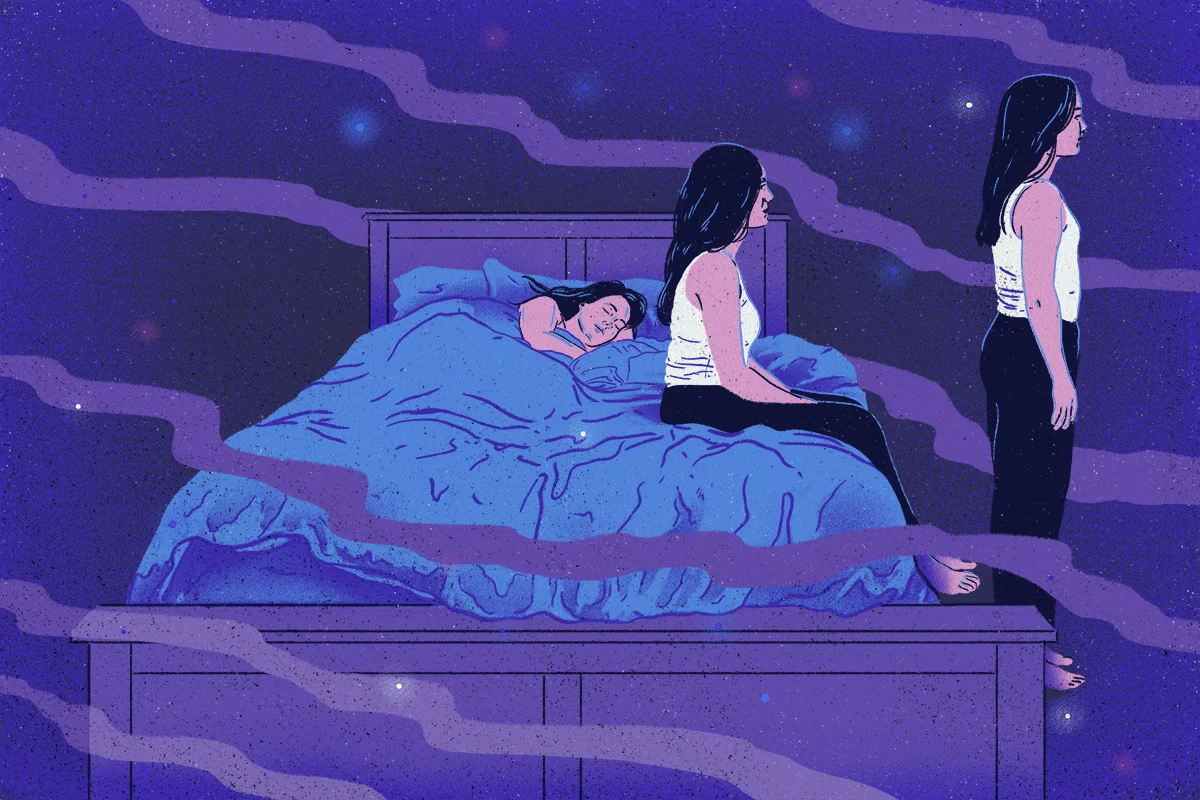
- False Awakening: You believe you’ve woken up, but you’re still trapped in a dream. The environment around you feels real: your room, routine, everything seems normal. Only after you truly wake up do you realize you are still in bed, and it is only 6 am.[5] False awakenings are confusing because you won’t know you’re dreaming until it’s over.
- Sleep Paralysis: Sleep paralysis happens when your mind wakes up, but your body is still in a sleep state, leaving you unable to move. For example, you wake up aware of your alarm going off, but your body is still in sleep mode and can't move to turn it off just yet. This can be terrifying since you can experience hallucinations, like shadowy figures, or sense a presence in the room at the same time.
- Lucid Dreaming: While in a lucid dream, you know you’re dreaming while still fully asleep, mind and body. Imagine realizing you're dreaming and deciding to change the setting from a city street to a beautiful beach. Unlike false awakenings, lucid dreaming gives you control over your actions and the dream’s storyline. It’s a conscious, often exhilarating experience where the dreamer can actively shape the dream world.
Key Take Aways#
False awakenings feel real: REALLY real. But you’re not imagining them, well, you are, but you're doing it so realistically - it’s no wonder they throw you. From work anxiety to that glass of wine before bed, many factors can make you blur the lines between dreaming and waking. They come in two flavors: normal and spooky. But even for the spooky ones, it’s not all bad news. If you’re stuck in a false awakening loop, do a reality check, like reading the time. This helps you break the cycle and regain control. Above all, don’t panic. False awakenings may be strange, but they’re harmless. Better sleep hygiene will help you keep them at bay. Giving you a better, more restful night‘s sleep.
If you're experiencing frequent false awakenings, try the Oniri App. We offer countless tools and techniques to help you better understand and control your dreams. Improve your dream life with our valuable resources and learn to create the sweet dreams you deserve.



Источники и ссылки
Эта статья основана на опубликованных исследованиях, рецензируемых научных работах и надёжных книгах. Загляни в источники ниже, если хочешь копнуть глубже.
[1]False Awakening
Sleep Foundation
[2]Prevalence of different parasomnias in the general population
Bjorvatn, B., Gronli, J., & Pallesen, S. · 2010
Sleep Medicine, 11(10)
[3]What Is a False Awakening?
Verywell Health
[4]Somnambulism: clinical aspects and pathophysiological hypotheses
Zadra, A., et al. · 2013
The Lancet Neurology, 12(3)
[5]What is the meaning and cause of false awakening dreams?
Sleep Matters Club

Written by
Founder of Oniri
Jean-Baptiste founded Oniri and researches dreams, lucid dreams, creativity, and AI. He collaborates with the Sleep and Cognition Neuroimaging Laboratory in Geneva and is invested in different studies about lucid dreams and the intersection of dreams and AI, including a paper in the Journal of Sleep Research on cathartic dreams.
Share this article