5 Fascinating Facts About Sleep and Dreams
Ever since the dawn of civilization, we have been captivated by the relationship between sleep and dreaming. Despite our long-held interest, the purpose of dreaming and its link to sleep is only just beginning to be decided. There is one clear thing: sleep and dreams are essential parts of the human experience. Here are the top 5 fascinating facts about sleep and dreams to help you gain insights into how they impact your health.
1. We all dream differently#
While we go through the same sleep stages, we all experience dreams differently. For some, our dreams burst with colors, visual details, and narratives complete with sounds and movements. For others, dreams are more abstract thoughts or still images.
Black-and-white dreams are the strangest case, because whether you have them seems to depend on what you watched as a child. Researchers compared two age groups with different media histories and found that people who grew up with black-and-white television, before colour arrived, reported far more greyscale dreams than people who never had that exposure.[1] The pattern held whether they were asked by questionnaire or kept a diary. The authors go as far as suggesting that truly greyscale dreams may occur only in people with black-and-white media experience, which would make them less a quirk of the brain than a fossil of twentieth-century broadcasting.
People born blind are often said to dream only in sound, smell and emotion. The evidence is more interesting than that. Researchers recorded ten congenitally blind volunteers overnight and asked them to draw their dreams in the morning. The drawings were not meaningfully different from those of sighted participants, and both groups showed the same EEG signature associated with visual activity during dreaming. The blind participants did recall fewer dreams overall, on 27% of awakenings against 42% for sighted people.[2] Whatever visual imagery means in a brain that has never seen, something in these dreams behaves like it.
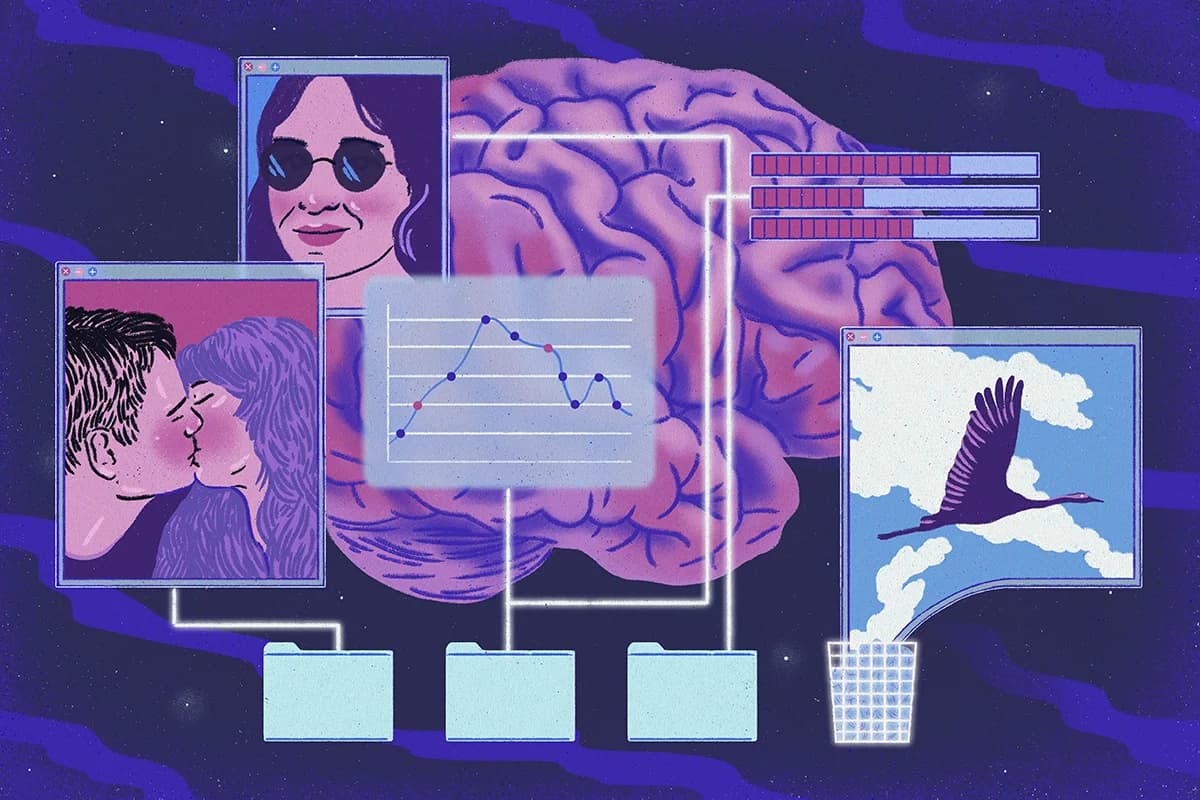
Scientists are so interested in what dreams look like that they have begun decoding them. Volunteers slept in an fMRI scanner and were woken repeatedly to describe what they'd been seeing; models trained on those reports could then predict, from brain activity alone, the broad category of thing a sleeper was looking at.[3]
One theory on why we dream differently is that sleep helps consolidate our experiences into our long-term memory. Just as the ingredients for a recipe can be similar but make different dishes - think how flour can make cake or bread - everyone's experience of the world differs slightly. How our minds combine our experiences in our dreams to bake into our memories is what makes each dream unique.
Memory consolidation during dreaming is essential because it :
- Strengthens the neural connections related to recent events, allowing us to learn and remember new things.
- Helps connect new memories with old ones.
- Keeps our long-term memories stable as we learn new things.
- Organizes our memories and gets rid of unimportant details.
Additionally, we all remember our dreams differently. While most people dream many times per night, only some of us remember our dreams at all. Studies suggest we remember less as we age because of changes in sleep quality, stress, sleep disorders, and cognitive decline.[4] That said, whether we actually dream less or simply remember less as we age is still being explored. Keeping a dream journal app by your bed is one of the simplest ways to capture these fleeting memories before they fade.
For all this magic to happen, we must get regular, great-quality sleep. And to get great quality sleep and dreams, we must have stable sleep cycles.
2. Our sleep cycles influence our dreams#
As we drift into our slumbering minds - it is easy to think we simply switch off. But the truth is there is a constant ebb and flow of sleep cycles every night. You can think of the interplay between different stages, like the conductor, and our dreams, like the instruments in an orchestra.
During a typical night's sleep, we go through several sleep cycles, each lasting about 90 minutes. Broadly, the cycle consists of two types of sleep: non-rapid eye movement (NREM) sleep and rapid eye movement (REM) sleep. The quality of our sleep is a combination of duration, continuity, and depth of these cycles.
Most dreams happen during the REM, which occurs later at night. Good quality sleep, where we get more REM, allows our bodies to restore and makes our dreams more vivid. Intense dreams of familiar things or wild fantasies feel real because our brains act similarly during REM as when we are awake.
During REM dreams, we see:
- More Cortical Activity: During REM, the part of our brain responsible for senses, memory, and emotions lights up. This activity explains why dreams can be inseparable from reality and is the reason we can “feel” our dreams through our senses.2. Activation of Global Brain Metabolism: During REM dreams, our brain uses energy. Our overall energy consumption is higher to support neural and synaptic fireworks that create our dream narratives.3. Activation of the High-Order Visual Cortex: This part of our brains allows us to see and understand visual information. It is very active in REM and responsible for the surreal graphic scenes we experience in our dreams. When combined with input from other sensory areas and memory networks, it makes for an immersive experience.
As the night goes on, our REM cycles get longer, and our dreams do too. So, if our brains don't really know we are asleep, how do we not act everything out? Well, along with the heightened brain activity, our bodies experience REM atonia (a.k.a sleep paralysis). This paralysis helps us remain still and not harm ourselves during dreaming.[5]
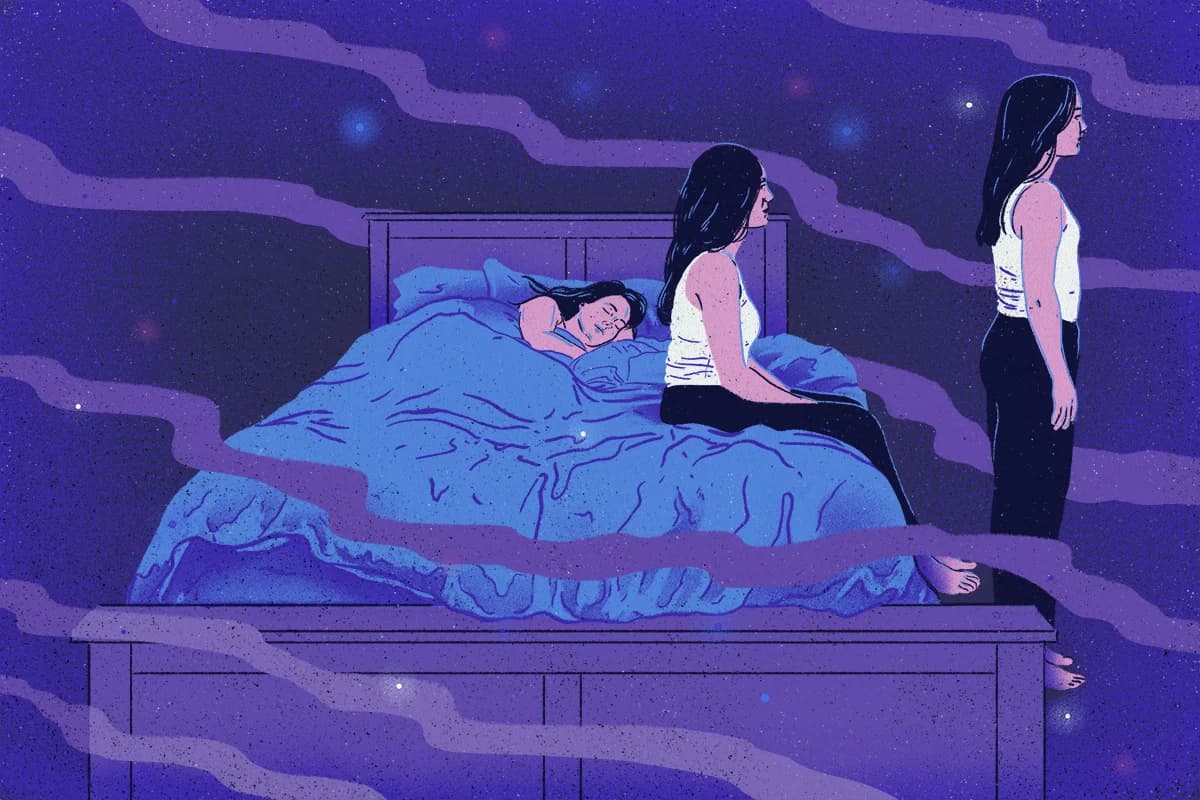
While this temporary paralysis is necessary during REM sleep, it can go awry in people with parasomnias (or disruptive sleep disorders). Somnambulism (a.k.a sleepwalking) happens when this mechanism's functioning doesn't quite kick in. On the other hand, sleep paralysis can become a disorder when it occurs in NREM.[6]
We know that stable sleep cycles where we get REM are important for our dreams. But how does the quality of sleep in REM actually influence our dream content?
3. Bad sleep quality can lead to bad dreams#
The more uninterrupted our evening's rest, the more vivid and tranquil our dreams will likely be. Conversely, fragmented REM sleep might be causing chaotic dreams, and reflecting or creating unrest in our subconscious mind.
Moreover, the quality of our sleep environment impacts the tone of our dreams. It's simple, really: a serene, stimulation-free environment creates a sense of calm, leading to stable, sweet dreams.
The opposite is also true. A disruptive sleep environment can make you irritated, leading to dreams fraught with tension and unease. Nobody likes being interrupted, and unexpected stimuli reduce the amount you sleep, how long you spend in REM, and how much of your dreams you can recall.
What's more, the study "The Effects of Sleep Quality on Dream and Waking Emotions" found that good sleepers had more positive dreams.[7] While those who didn't sleep well experienced more negative dreams.
If you are experiencing negative dreams, you may want to investigate if you are:
Sleep-Deprived:
When we are sleep-deprived, our body tries to catch up, increasing the time spent in REM sleep when we finally doze off. This can make our dreams extremely vivid and intense and is known as REM rebound.[8] If we are sleep-deprived over a long time, our bodies may start forcing microsleep episodes where we nod off involuntarily. During these episodes, dreams are often fragmented and incoherent.
On Medication:
Medications can change our dream world by changing neurotransmitters like GABA, serotonin, norepinephrine, and dopamine. These are all essential in controlling non-REM and REM-related dreaming.[9]
Stressed Out:
Stress can seriously mess with our sleep and subconscious. When we are stressed out, falling asleep can be tough, and we might find ourselves waking up more often during the night. Dreams, when we are stressed, tend to be emotionally charged as we grapple with the worries and concerns of our day. Stressful events themselves can even pop up in our dreams as content and alter the mood of the dream itself.[10]
Speaking of mood, how does our sleep quality and dream content help our moods?
4. Sleep and dreams help stabilize our moods#
It is widely accepted that sleep helps us to adapt to and process daily stressors. During REM sleep, our brains shift focus from logical thinking to processing emotions. There is an uptick in activity in the limbic system - specifically the amygdala and neocortex - which helps us emotionally regulate.[11] It is why you wake up in such a good morning mood after a slumberous night of REM sleep.
Studies have even shown dreaming can be really good for depression despite the dream content being negative.[12] Dreams offer a safe space for expressing and exploring emotions in a less direct way. Similar to how glasses help us see clearly, dreams can offer us a chance to gain clarity on our emotions. Then, we can use that clarity on our innermost thoughts to fuel personal growth and dissolve our intrapsychic stress.
This manifests as heightened emotional reactivity - a.k.a anxiety - and reduced resilience - or “oversensitivity.” And where does the most relaxing sleep happen? You guessed it - in the restorative REM sleep phases.
REM dreams are also said to help us process trauma by breaking down our experience into smaller, more abstract episodes. Dreams in REM help by enhancing positive stimuli and dissolving the fear in our memories. We know that REM sleep is extremely important. But if REM is where all the dreaming and restoring is happening - why do we even have other types of sleep?
5. Naps, dreams, and lucid dreams help with problem-solving and creativity#
Naps help us be creative by connecting known information in novel ways, and one experiment pinned down which part of the nap does it. People worked on a creative word-association task, then either rested quietly, napped without reaching REM sleep, or napped through REM. Only the REM group improved, and only on the material they had been primed with beforehand. Quiet rest did nothing. Non-REM sleep did nothing. It was REM specifically, forming links between things that were not previously linked, and not simply better memory for the primed words.[13] The exciting part about this fact is the idea that we can solve problems literally in our sleep. So, do the dreams themselves actually help us solve complex problems by boosting our creativity?
Surprisingly, yes, and unlike our vivid dreams, these creativity-boosting dreams happen in NREM sleep.[14]
A recent study found that a quick cat nap in the semi-lucid state of early sleep (also known as N1 sleep) is what sparks creativity. In the experiment, scientists looked at the relationship between N1 dream content, lucid dreaming, and creative performance. They tried to figure out if targeted dream incubation (a.k.a telling dreamers what to dream) enhanced post-naptime creativity.
Fifty participants took part, with some guided to think about a "tree" before sleeping while others weren't. After their 45-minute nap, participants told stories, brainstormed, and came up with verbs related to trees. The findings showed those who dreamt about the "tree" showed more creativity in their tasks than those without a specific dream focus.[15]
While science is only just catching up, many icons of history and art were known to nap. Leonardo Da Vinci would sleep 2 hours each night with a 15-minute power nap every 4 hours during the day. Salvador Dali used to nod off in a chair, holding a key so that when he dozed off, the key would fall and wake him up. But it is not just artists.
Inventor Thomas Edison and Scientist Albert Einstein dozed for the creative benefits of this light sleep phase. John F. Kennedy was no exception to the siesta. And perhaps most surprisingly - Winston Churchill nodded off daily after lunch DURING World War II to stay innovative!
Conclusion#
For centuries, the connection between sleep and dreaming has fascinated scientists, artists, and philosophers. This fascination highlights the vital role both play in our health and consciousness. Understanding and improving our sleep patterns and dream experiences can significantly improve our emotional health, cognitive function, memory, creativity, and overall well-being.
To discover more about your dream patterns, check out the Oniri app! It will help you keep a dream journal, analyse your dreams, and practice lucid dreaming.
Veelgestelde vragen
What are some reasons why people experience dreams differently?
People experience dreams differently due to individual variations in sensory perception, memory consolidation, and cognitive processing. Dreams can range from vivid narratives with colors and sounds to abstract thoughts or still images. Our sensory abilities, past experiences, and psychological states influence dreams' manifestation. For example, people born blind recall fewer dreams on average, though when asked to draw their dreams they produce imagery comparable to sighted people, so the picture is more complicated than a simple absence of vision. Memory consolidation during sleep also plays a role, combining recent experiences with long-term memories to create unique dream content for each person.
How do sleep cycles influence the quality and content of our dreams?
Non-rapid eye movement (NREM) and rapid eye movement (REM) sleep determine dream quality and content. During a typical night's sleep, we cycle through NREM and REM stages multiple times, each lasting about 90 minutes. Most vivid dreams occur during REM sleep when brain activity resembles wakefulness. With longer REM periods, good-quality sleep enhances dream vividness and emotional richness. Conversely, disrupted sleep cycles can lead to fragmented and chaotic dreams, impacting overall quality and recall.
How does dreaming contribute to emotional regulation and mood stabilization?
Dreaming is essential for emotional regulation and mood stabilization, particularly during REM sleep. REM sleep activates the limbic system, including the amygdala and neocortex, which processes and regulates emotions. This helps adapt to daily stressors and enhances emotional resilience. Dreams are a safe space to explore and express emotions, promoting mental clarity and personal growth. Even negative dream content can benefit emotional health by allowing individuals to process complex feelings and reduce intrapsychic stress, ultimately improving mood and emotional balance.
What are some common factors that lead to negative dreams or nightmares?
Negative dreams or nightmares can result from various factors, including poor sleep quality, stress, medication, and sleep deprivation. Fragmented REM sleep often causes chaotic and emotionally charged dreams. Stress and anxiety often lead to frequent awakenings, contributing to more intense and negative dream content. Certain medications can alter neurotransmitter levels, affecting dream quality. Sleep deprivation triggers REM rebound, increasing REM sleep intensity and causing vivid, often distressing dreams. Creating a serene sleep environment and addressing stressors can help mitigate negative dream experiences.
Why do some people remember their dreams more than others?
Dream recall varies due to age, sleep quality, and individual differences in brain function. Younger individuals generally have better dream recall, while older adults may remember fewer dreams due to changes in sleep patterns, stress, or cognitive decline. High sleep quality, with uninterrupted REM cycles, enhances dream recall. People who frequently awaken during REM sleep are likelier to remember their dreams. Additionally, those who actively engage in practices like dream journaling or mindfulness may improve their ability to recall dreams consistently.



Bronnen en referenties
Dit artikel is gebaseerd op gepubliceerd onderzoek, peer-reviewde studies en betrouwbare boeken. Bekijk de bronnen hieronder als je verder wilt lezen.
[1]Do we only dream in colour? A comparison of reported dream colour in younger and older adults
Murzyn, E. · 2008
Consciousness and Cognition, 17(4)
[2]Visual dream content, graphical representation and EEG alpha activity in congenitally blind subjects
Bértolo, H., et al. · 2003
Cognitive Brain Research, 15(3)
[3]Hierarchical neural representation of dreamed objects revealed by brain decoding with deep neural network features
Horikawa, T., & Kamitani, Y. · 2017
Frontiers in Computational Neuroscience, 11
[4]Spotlight on dream recall: the ages of dreams
Mangiaruga, A., Scarpelli, S., Bartolacci, C., & De Gennaro, L. · 2018
Nature and Science of Sleep, 10
[5]Unraveling the mechanisms of REM sleep atonia
Brooks, P., & Peever, J. · 2008
Sleep, 31(11), letter
[6]A clinician's guide to recurrent isolated sleep paralysis
Sharpless, B. A. · 2016
Neuropsychiatric Disease and Treatment, 12
[7]The effects of sleep quality on dream and waking emotions
Conte, F., et al. · 2021
International Journal of Environmental Research and Public Health, 18(2)
[8]REM rebound effect
StatPearls
[9]Drug induced nightmares: an etiology based review
Pagel, J. F., & Helfter, P. · 2003
Human Psychopharmacology, 18(1)
[10]Sleep, dreams, and memory consolidation: the role of the stress hormone cortisol
Payne, J. D., & Nadel, L. · 2004
Learning & Memory, 11(6)
[11]Emotion, emotion regulation, and sleep: an intimate relationship
Vandekerckhove, M., & Wang, Y. L. · 2018
AIMS Neuroscience, 5(1)
[12]Dreaming away depression: the role of REM sleep and dreaming in affective disorders
1996
Journal of Affective Disorders, 41(2)
[13]REM, not incubation, improves creativity by priming associative networks
Cai, D. J., et al. · 2009
PNAS, 106(25)
[14]Dreaming in NREM sleep: a high-density EEG study of slow waves and spindles
Siclari, F., et al. · 2018
Journal of Neuroscience, 38(43)
[15]Targeted dream incubation at sleep onset increases post-sleep creative performance
Horowitz, A. H., et al. · 2023
Scientific Reports, 13
[16]What does the sleeping brain say? Syntax and semantics of sleep talking in healthy subjects and in parasomnia patients
Arnulf, I., et al. · 2017
Sleep, 40(11)

Written by
Editor
Megan is a freelance writer and editor who covers dreams, sleep, and mental health for Oniri. She studied humanities at Stellenbosch University and also writes in wellness, conservation, and food. Find her on LinkedIn.

Reviewed by
Founder of Oniri
Jean-Baptiste founded Oniri and researches dreams, lucid dreams, creativity, and AI. He collaborates with the Sleep and Cognition Neuroimaging Laboratory in Geneva and is invested in different studies about lucid dreams and the intersection of dreams and AI, including a paper in the Journal of Sleep Research on cathartic dreams.
Share this article