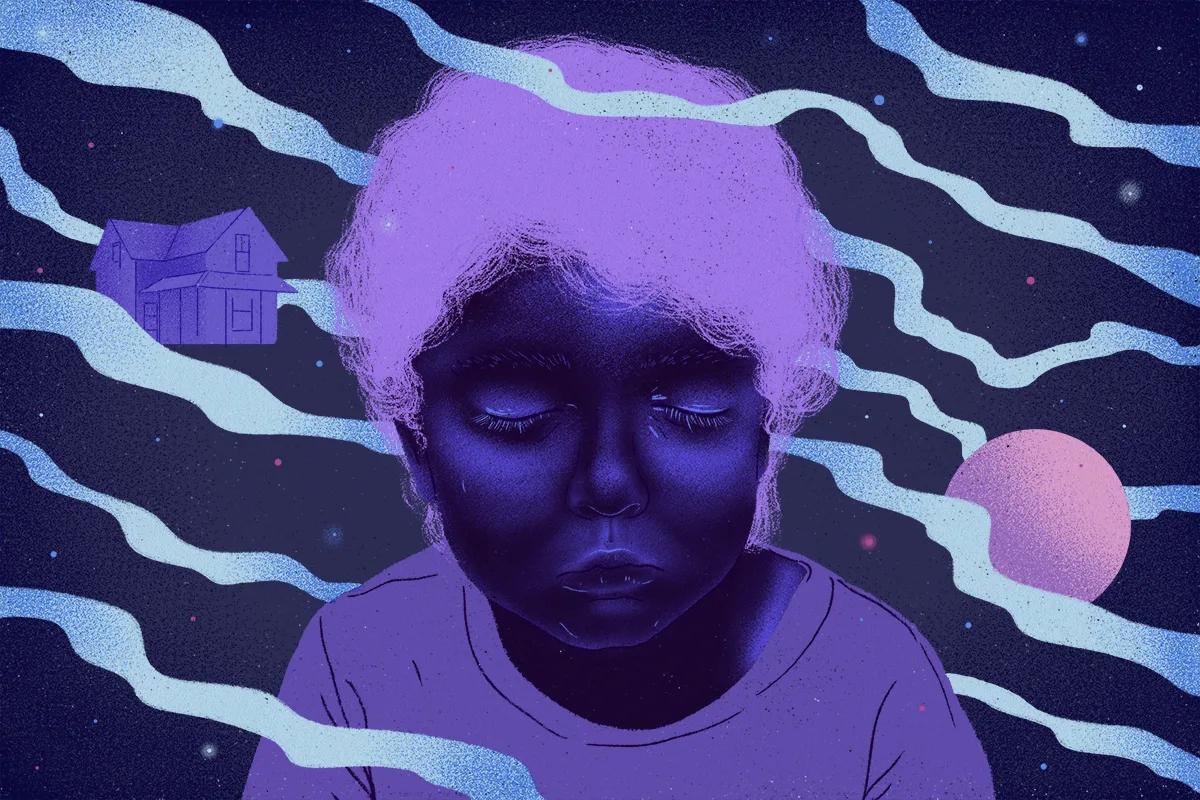
Prophetic Dreams: Can Dreams Predict the Future?
Das Wichtigste in Kürze
- A prophetic dream is a dream that seems to show an event before it happens, and between 17.8% and 38% of people in large surveys say they have had at least one.
- Laboratory tests of precognitive dreams since the 1960s have produced small, contested results, and no study has shown that dreams can reliably predict the future.
- People remember dreams that come true far better than dreams that don't: in one experiment, readers of a dream diary recalled more than twice as many fulfilled dreams as unfulfilled ones.
- Most dreams that seem to come true have ordinary explanations: coincidence across thousands of nights, selective memory, and a brain that builds dreams from worries and clues it has already picked up.
- A dream only counts as prophetic if it was written down and dated before the event, and the fair way to judge one is to count it against every dream that never came true.
In large surveys, between 18% and 38% of people say they've had at least one dream that came true, and far more believe it can happen.[1] Prophetic dreams are among the oldest claims people make about sleep, and among the hardest to shake once you've had one, because the match can feel too exact to be chance. Science has no solid evidence that dreams can see the future, but it has a good account of why some of them seem to. Here's what prophetic dreams are, what the tests have found so far, and how you can test your own.
What are prophetic dreams?#
A prophetic dream is a dream that seems to show something before it happens: a phone call, an accident, a death, the face of someone you'll meet the following week. Religious writers usually call it a prophetic dream, parapsychologists a precognitive dream, and most people simply say they had a premonition, but it's the same experience under three names. What makes a dream feel prophetic is the match between the dream and a later event you had no way of seeing coming.
Researchers who study these dreams use a stricter test, five conditions first drawn up by a German parapsychologist.[2] The dream has to be written down or told to someone before the event, and it needs enough detail that chance becomes unlikely. It can't be something you could have worked out from what you already knew, and you can't have made it come true yourself. Nobody else can have known about it at the time either. But the first condition is where most stories fall, because almost nobody writes a dream down before it has come true.
Prophetic dreams in the Bible, the Talmud and the Quran#
For most of recorded history, a dream that came true was taken as a message. In Genesis, Joseph reads Pharaoh's dream of seven fat cows eaten by seven thin ones as seven years of plenty, then seven of famine. The Quran tells the same story in the chapter named after him. The Talmud calls a dream one-sixtieth of prophecy, and in the hadith collected by al-Bukhari a good dream is one of forty-six parts of prophecy. Both also leave plenty of room for dreams that mean nothing, since the hadith names three kinds of dream and only one of them comes from God. And the Talmud adds that just as there's no grain without straw, there's no dream without some nonsense in it (even one that comes true).
Doubting prophetic dreams is nearly as old as believing in them. In the 4th century BC, Aristotle wrote a short treatise on prophesying by dreams, and he sorted the ones that came true into three kinds.[3] Some were tokens, where the dream picked up the first faint sign of something already starting (an illness, for example). Some were causes, where the dream nudged the dreamer into doing the very thing it showed. The rest, and he thought that was most of them, were plain coincidence. He compared prophetic dreamers to gamblers, who are bound to win now and then if they throw the dice often enough.
Why, indeed, should this not happen also in sleep? The probability is, rather, that many such things should happen.
He also pointed out that animals dream too, so dreams can hardly be messages sent by a god. If you want the longer story of how people have read their dreams, starting with the clay tablets of ancient Mesopotamia, the history of dream interpretation covers it.
How common are prophetic dreams?#
If you've had a dream that came true, you're far from alone, and in the same surveys between 63% and 98% of people said they believe such dreams are possible. Women report prophetic dreams more often than men do. And the people who remember the most dreams also report the most prophetic ones, which makes sense, since you can't notice a match with a dream you've forgotten.
Dreams are also where most of these feelings of knowing the future happen. In collections of cases where people felt they'd known something in advance, around 60% involved a dream and another 10% a half-asleep state. The themes are mostly grim, with death the most common (followed by accidents and injuries). But that may say more about which dreams people bother to report than about the dreams themselves.
A milder version of the experience is close to universal. It's called déjà rêvé, French for "already dreamed", and it's the sudden feeling, in the middle of an ordinary moment, that you've dreamed this exact scene before. In a survey of 444 students at three German universities, 95% said they'd had it.[4] It was most common in younger people, in those who remember many dreams and in people who get easily absorbed in what they're doing. That sounds a lot more like a quirk of memory than a glimpse of the future.
What happened when scientists tested precognitive dreams#
Asking people about dreams they've had can only tell you how common the feeling is. Does a dream really carry information about the future? Or does it only seem to, once you know how things turned out? To find out, you have to catch the dream before the event, and researchers have tried to do that in three ways.
In the sleep lab#
The best-known attempt started in 1962, when a psychiatrist opened a dream laboratory at the Maimonides Medical Center in Brooklyn. Over the next sixteen years it ran thirteen formal studies of dreams and extrasensory perception, two of them on precognition, and most came out positive. Volunteers slept in the lab and were woken to report their dreams, and judges then compared the reports with a picture or an experience chosen at random.
A review of 50 such studies, from 1966 to 2016, found that dreams matched the chosen target more often than chance would predict.[5] The effect was smaller outside the Brooklyn lab, though, and the authors asked for better-designed studies before anyone drew firm conclusions. In a more recent online test, 50 people sent in a summary of their dreams every week for four weeks. Judges ranked each summary against four video clips, and only then was one of the clips picked at random as the target. The judges put the right clip first 32% of the time. Chance alone would give 25%, so that's a small effect in the dreams' favour, but the clips that scored a hit weren't rated any more similar to the dreams than the ones that missed, and the researcher called her own result tentative until someone repeats it.
Dream diaries kept in advance#
The simplest test is to collect dreams and wait. In the early 1930s, a researcher asked volunteers to write down their dreams the moment they woke and post them to him, then to tell him if anything in their lives matched. Out of 265 dreams collected over eight weeks, he judged that two looked "moderately" precognitive. A second series of 148 dreams gave 12 apparent hits, two of them good.[6]
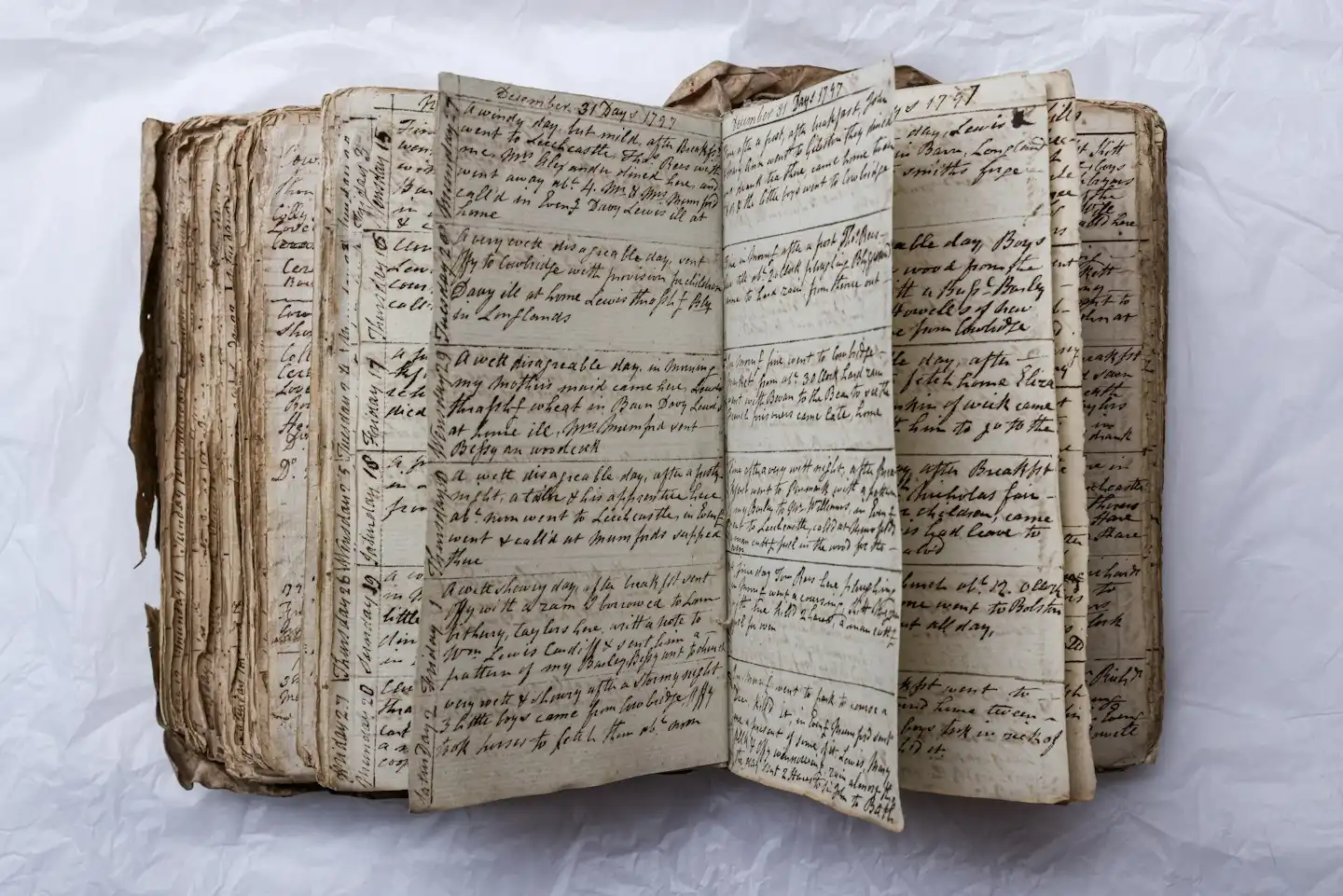
Those numbers are what a prophetic dream looks like when you count the misses as well as the hits. A couple of striking matches in a few hundred dreams feels real to the person who has them, but it's also roughly what you'd expect when we spend every night dreaming about our own lives.
The Premonitions Bureau#
The largest real-world test came out of a disaster. In October 1966, a colliery spoil tip slid down onto the village of Aberfan in Wales, burying the school and killing 144 people, 116 of them children. A psychiatrist named John Barker visited afterwards and was struck by how many people said they'd had a feeling it would happen. So he asked the public to send in any premonitions they'd had. Plenty arrived, but they had been collected after the fact, so none of them could prove anything.[7]
To catch predictions before the event, Barker and a newspaper science editor opened what they called the Premonitions Bureau, hoping it could become a national early-warning system. For 18 months they logged and scored hundreds of dreams and forebodings, rating each one for how unusual it was, how accurate it turned out to be and how far ahead it came. A few seemed to match later disasters, but over 90% didn't correspond to anything that happened, and the bureau faded partly because so few predictions could be tied to a specific event.
So the honest answer is that nobody has shown that dreams can see the future, and nobody has completely ruled it out either.
Why some dreams seem to come true#
None of this means your dream was nothing, or that you imagined the match. Most dreams that come true have an ordinary explanation, and Aristotle's three kinds still cover most of them (coincidence, a sign your brain had already picked up, and a dream that made itself come true).
Coincidence, given enough nights#
We go through four or five dreaming periods every night, and most of what we dream is about the people and places in our own lives. If you remember a dream on three mornings a week, that's around 150 dreams a year, and more than 7,000 by the time you're fifty. Somewhere in those thousands of dreams, a few will look like something that happened later. The strange thing would be if none ever did.
Our brains are also very good at finding matches, even where there's nothing to find. Students given real dream reports paired at random with BBC news stories from a decade earlier found 11 connections on average across four pairs.[6] And the ones who believed most in precognitive dreams found the most. Carl Jung, who took such coincidences more seriously than most psychologists of his time, called a coincidence that feels meaningful "synchronicity" (his view of dreams goes further into it).
Selective memory#
The dreams that come true stay with you, and the ones that don't vanish by lunchtime. In one experiment, 85 people read a student's diary in which she wrote down her dreams and what happened to her each day. Four of her dreams came true and four didn't, and when asked to recall the diary later, people remembered more than twice as many of the dreams that came true.
Which dreams people remember
Share of each kind of dream recalled from a dream diary
- Dreams that came true: 52%
- Dreams that didn't: 22%
Source: Watt et al., 2014[6]. 85 people, a diary with four dreams of each kind.
Believers and skeptics did it equally, which is the part worth remembering, because it means you can't think your way out of the bias. Your own memory filters your nights the same way. Hundreds of dreams that led nowhere are gone, and the one about the car crash is still there, so it feels like your dreams come true far more often than they do.
Your brain had the clues already#
Dreams are built from what you already know, fear and expect, and that makes some of them look like forecasts. If your grandmother has been ill for months, a dream about her death is your mind working through something it already suspects. So is a dream about failing the exam you're nervous about (dreams borrow a great deal from waking life, and part of why we dream may be to rehearse it). Aristotle's tokens fit here too, because small signals, like a change in your body or a strain in a friendship, can surface in a dream before you've consciously noticed them. So a dream is far more useful as a picture of your present than as a forecast, and that's how Oniri's dream meaning tools read it.
A few dreams even help cause what they show. If you dream of a fight with your partner and wake up already annoyed, the fight you have that evening is partly the dream's doing. That's why the researchers' test rules out any dream you could have made come true yourself.
Has a dream about a crash or a death left you afraid it will happen? It helps to know that these are simply the themes people report most, and there's no evidence that dreaming of a disaster makes it more likely. If those dreams keep coming back, the guide to having fewer nightmares covers what helps. A dream about someone who has already died is a different experience, and it's usually part of dreams and grief rather than a message about the future.
How to test your own prophetic dreams#
John William Dunne, whose 1927 book on dreams and time was widely read, came close to debunking one of his own prophetic dreams. In the spring of 1902, he was serving with the British army in South Africa when he dreamed he was standing on a volcanic island about to explode. He spent the rest of the dream begging French officials to send ships for the 4,000 people who would die. When the newspapers finally reached his camp, the Daily Telegraph reported the eruption of Mont Pelée on Martinique, a French island, with a probable loss of over 40,000 lives.[8] In his hurry, Dunne had read the figure as 4,000, and he only noticed his mistake fifteen years later, while copying the paragraph out.
So my wonderful "clairvoyant" vision had been wrong in its most insistent particular!
The number in his dream came from the newspaper (misread) and not from the island. Had he dreamed of his own reading of the paper, or only remembered a dream that seemed to fit it? So he began writing his dreams down the moment he woke and checking them against the following days, and he described the method in An Experiment with Time in 1927. When a researcher later asked him to post his dreams as they came, Dunne sent 17 over four months, and four contained what the researcher judged "fair or moderate" matches.

His method is still the only fair way to test a prophetic dream, and it's simple enough to start tomorrow morning. You want a record that was made before the event and that holds every dream, the misses as well as the hits.
- Keep a dream journal by your bed and write each dream down as soon as you wake, before you look at your phone or the news.
- Date every entry (or use an app that dates them for you).
- Write down all of your dreams, including the dull ones, because the misses are exactly what memory throws away.
- Note the details that would surprise you if they happened, since those are the only ones that can count.
- Once a month, read the whole journal back and count the hits and the misses, then check each hit against what you already knew, feared or had read.
If you're not used to remembering dreams, it takes a week or two to get going, and remembering more of your dreams has the tricks that help. Oniri's dream journal dates and stores every entry, so a month of dreams is there to read back in one go. And if one morning a dream does come true, you'll have something most prophetic dream stories never have, which is the date on the page.
Häufige Fragen
Can dreams be warnings?
Dreams can warn you about the present, but there's no reliable evidence they can warn you about the future. A dream often picks up something your mind has already noticed, like a worry you've been pushing away, a relationship that feels off or, more rarely, a change in your body. That kind of warning is worth listening to. A dream about an accident or a disaster you had no way of knowing about is a different claim, and research hasn't backed it.
Do dreams come true if you remember them?
No. Remembering a dream doesn't make it more likely to happen, but it does make it more likely that you'll notice when something matches it. People who recall more dreams report more prophetic ones, simply because they have more dreams to compare with their days. Memory also keeps the hits: in one experiment, people remembered more than twice as many dreams that came true as dreams that didn't.
Do morning dreams come true?
There's no evidence that dreams from the early morning come true more often than other dreams. Morning dreams are the ones you're most likely to remember, because the longest stretches of REM sleep, where most vivid dreams happen, come in the last hours of the night and you often wake straight out of them. That makes them feel clearer and more important, which is likely where the belief comes from.
Are prophetic dreams a gift from God?
That's a question of faith, and science can't settle it either way. The Bible, the Talmud and the Quran all describe dreams sent by God, and the Talmud and the hadith also describe ordinary dreams that carry no message at all. What research can tell you is that most dreams that seem to come true have an everyday explanation, so it's worth ruling those out before you act on one.
Can nightmares come true?
A nightmare doesn't make a bad event more likely, and there's no evidence it can foretell one. Nightmares are built from the same material as other dreams (stress, fears, recent events) with the volume turned up. Death and accidents are the themes people report most in dreams they believe came true, partly because frightening dreams are the ones we remember. If the same nightmare keeps waking you, it's treatable, and sleep doctors have a method that works.



Quellen und Referenzen
Dieser Artikel stützt sich auf veröffentlichte Forschung, peer-reviewte Studien und verlässliche Bücher. Schau in die Quellen unten, wenn du tiefer einsteigen willst.
[1]What precognitive dreams are made of: The nonlinear dynamics of tolerance of ambiguity, dream recall, and paranormal belief
Lange, R., Schredl, M., & Houran, J. · 2000
Dynamical Psychology
[2]Precognitive dreaming: Investigating anomalous cognition and psychological factors
Watt, C. · 2014
Journal of Parapsychology, 78(1)
[3]On Prophesying by Dreams (trans. J. I. Beare)
Aristotle
Elpenor
[4]The frequency of déjà vu (déjà rêve) and the effects of age, dream recall frequency and personality factors
Funkhouser, A., & Schredl, M. · 2010
International Journal of Dream Research, 3(1)
[5]On the correspondence between dream content and target material under laboratory conditions: A meta-analysis of dream-ESP studies, 1966-2016
Storm, L., Sherwood, S. J., Roe, C. A., Tressoldi, P. E., Rock, A. J., & Di Risio, L. · 2017
International Journal of Dream Research, 10(2)
[6]Psychological factors in precognitive dream experiences: The role of paranormal belief, selective recall and propensity to find correspondences
Watt, C., Ashley, N., Gillett, J., Halewood, M., & Hanson, R. · 2014
International Journal of Dream Research, 7(1)
[7]A data bank for the nation's dreams and visions
Wiseman, R. · 2022
The Psychologist, British Psychological Society
[8]An Experiment with Time
Dunne, J. W. · 1927
The Macmillan Company

Geschrieben von
Founder of Oniri
Jean-Baptiste founded Oniri and researches dreams, lucid dreams, creativity, and AI. He collaborates with the Sleep and Cognition Neuroimaging Laboratory in Geneva and is invested in different studies about lucid dreams and the intersection of dreams and AI, including a paper in the Journal of Sleep Research on cathartic dreams.
Artikel teilen