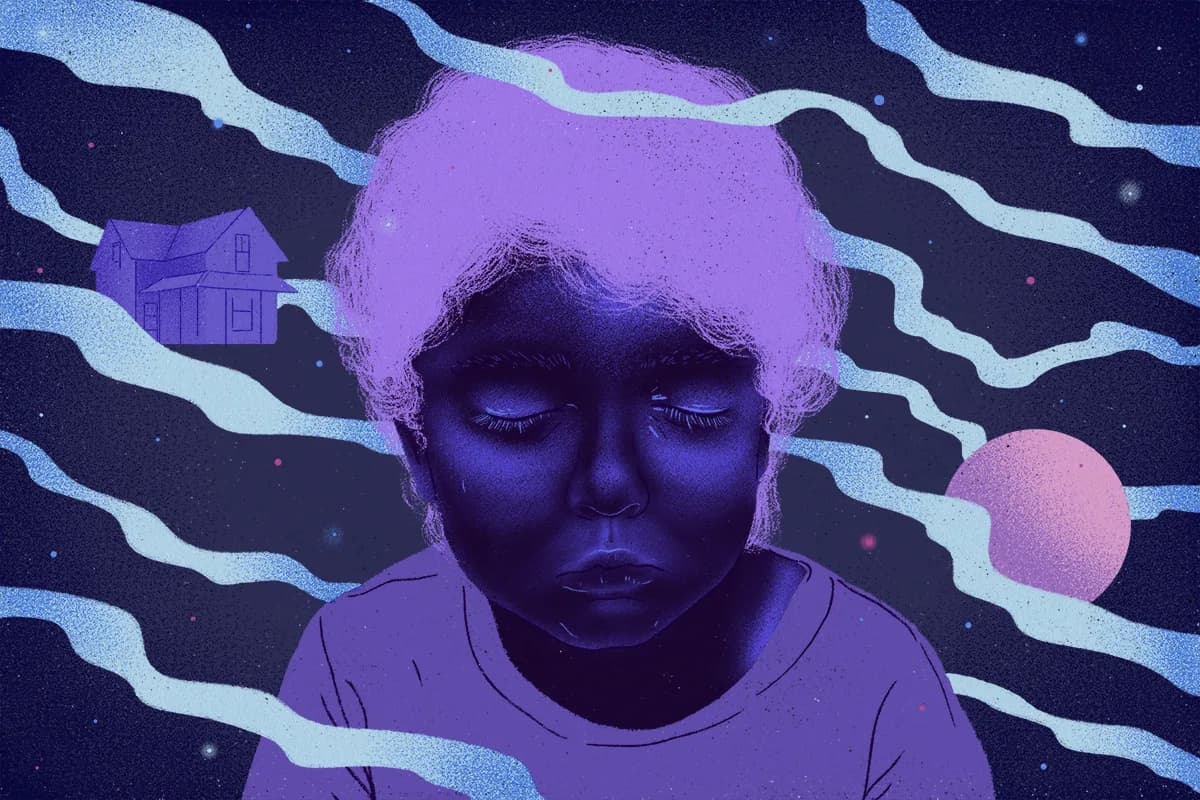
Can Dreams Predict the Future?
17-38% of people report experiencing some sort of precognitive dream.[1] To be classified as precognitive, dreams must have the following characteristics: You must record or tell others about your dream before it happens in waking life. The dream must have unique details so that it is unlikely to be fulfilled by chance. You must not be influenced by existing knowledge. If you dream of doing something, and as a result you decide to do it in waking life, this does not count as a true premonition.
Can dreams come true?#
Currently, scientists have not found solid proof that dreams can predict the future with accuracy. While our dreams may not "predict" the future, they seem to be pretty good at guessing what's possible.
The feeling has a name, and it's been measured#
The experience most people mean by a precognitive dream is déjà rêvé: the sense of having already dreamed something that is now happening. It turns out to be extremely common. In a survey of 444 students across three German universities, the overwhelming majority reported having had it.
What predicts it is the interesting part. Beyond age, the strongest correlates were dream recall frequency and personality traits like thin boundaries and absorption, the tendency to become deeply immersed in experience.[2] So the people who report precognitive dreams most often are, broadly, the people who remember the most dreams and are most inclined to feel merged with what they're experiencing.
That's not a debunking. It's a mechanism. If you remember four dreams a night, you have vastly more raw material for a later moment to match against than someone who remembers four a year. Combine that with a brain that generates plausible scenarios from your own memories every night, and coincidences stop being surprising and start being arithmetic.
The version of this that is real#
There's a genuine sense in which a dream can tell you about your future, and it isn't mystical.
Researchers surveyed medical students the night before a competitive entrance exam. 60% dreamed about the exam, and 78% of those dreams featured something going wrong: arriving late, forgetting everything. The students who dreamed about the exam went on to perform better than those who didn't, and the more they'd dreamed about it through the year, the better they scored.[3]
The dream did not see the future. It rehearsed it. Your brain builds simulations out of what you already know and what you're worried about, which is why the resulting scenarios so often feel prophetic afterwards: they were drawn from the same life the future is about to happen in.[4]
Some research suggests that some dreams may help predict illness by sending signals that there is a health issue in the body. Your dream is a neurobiological machine that simulates possible situations based on your memories and life experiences. Dreams have been proven to help people prepare for situations and take control of their health. It is like an advanced algorithm that generates possible outcomes. Dreams are designed to overlap with our waking life, that is why they are so personal to us. There is a term called intuitive dreams, which refers to our subconscious bringing things to the surface that we know inside. This is why many people dream of an illness shortly before they are actually diagnosed. They may not consciously realize they are more tired or less healthy, but their body and subconscious mind certainly inputs that data into their dreams.
We have many dream memories, and it is likely that events in our waking life trigger those memories. As you start to record your dreams, you may notice you dream of many different time periods of your life.[5] When we keep a dream journal, we are more consciously aware of the ways our dreams and waking life overlap.
Some people who have precognitive dreams may not interpret them as predictive until a corresponding event occurs in real life. Other people assign deep meaning to ambiguous elements. This discrepancy in how everyone interprets their dreams makes it difficult to study. Factors such as selective recall, tolerance for ambiguity, and paranormal beliefs can contribute to how someone draws connections between their life and dreams. Paranormal phenomena is also difficult to study mainly because we cannot create those occurrences on command.
This does not mean that it is impossible for dreams to predict the future. Scientists just haven't found solid evidence yet. Many people do believe their dreams predicted the future and warned them of a situation.
Carl Jung had a theory about precognitive dreams being linked to what he called 'Big Dreams'. They were archetypal and arose from the collective, not the personal level. The collective unconscious contains ancestral memories and the experiences of all sentient beings. Jung tried to bridge the gap between metaphysics and science.
Famous Precognitive Dreams#
President Abraham Lincoln dreamt of his death about a week before he died. He mentioned to his wife and friends that he saw details of his funeral and casket. He was apparently quite interested in the meaning of dreams and what they have to say about future events both positive and negative. This has left scientists perplexed about the true significance of dream content.
Aberfan Landslide is another famous example. In 1966, 150 people were killed when waste from a coal mine buried a school in South Wales. Many who had died, as well as other locals, had mentioned dreams and premonitions of dying in the days before. A 10-year-old girl who died in the landslide, had reported a dream the day before the accident, in which she told her mother that her school was no longer there and that it had been covered by something black.
Isaac Fruenthal was a passenger on the Titanic. He had a dream before boarding that it crashed into something and sank. He had the same dream while on the Titanic. Fruenthal survived the sinking, and his dream story has become famous.
Conclusion#
Dreams certainly show us our past, and present lives. What about dreams that predict the future; could they be real? Experts still don’t fully understand the potential of dreams and more research is needed on the topic. Perhaps in the near future, there will be a growing interest in dream research, and scientists can gather larger sample sizes and more funding.
"All our dreams can come true, if we have the courage to pursue them." -Walt Disney



出典・参考文献
この記事は、公開された研究や査読付きの論文、信頼できる書籍をもとに書いています。もっと知りたいときは、下の参考文献をのぞいてみてください。
[1]Can Dreams Predict the Future?
Sleep Foundation
[2]The frequency of deja vu (deja reve) and the effects of age, dream recall frequency and personality factors
Funkhouser, A., & Schredl, M. · 2010
International Journal of Dream Research, 3(1)
[3]Will students pass a competitive exam that they failed in their dreams?
Arnulf, I., et al. · 2014
Consciousness and Cognition, 29
[4]Characteristics of the memory sources of dreams
Vallat, R., Chatard, B., Blagrove, M., & Ruby, P. · 2017
PLOS ONE, 12(10)
[5]Dream recall frequency in a representative German sample
Schredl, M. · 2008
Perceptual and Motor Skills, 106(3)

Written by
Founder of Oniri
Jean-Baptiste founded Oniri and researches dreams, lucid dreams, creativity, and AI. He collaborates with the Sleep and Cognition Neuroimaging Laboratory in Geneva and is invested in different studies about lucid dreams and the intersection of dreams and AI, including a paper in the Journal of Sleep Research on cathartic dreams.
Share this article