Reality Shifting: What It Is and Is It Real?
핵심 요약
- Reality shifting is the practice of trying to move your consciousness into a chosen desired reality, often a fictional world like Hogwarts, using a written script, affirmations and meditation at bedtime.
- In two surveys run on a Reddit shifting forum, between two-thirds and four-fifths of shifters said they had never shifted.
- Common shifting symptoms such as tingling, floating, falling and flashes of light match the hypnagogic experiences that 37% of people in a large UK survey reported as they fell asleep.
- No evidence shows that anyone's consciousness leaves this reality, but the experience shifters describe is real and closest to a vivid dream at sleep onset, self-hypnosis or deep daydreaming.
- Psychologists say reality shifting becomes a concern when it is used more and more to escape daily life, and former shifters have described it turning into an obsession.
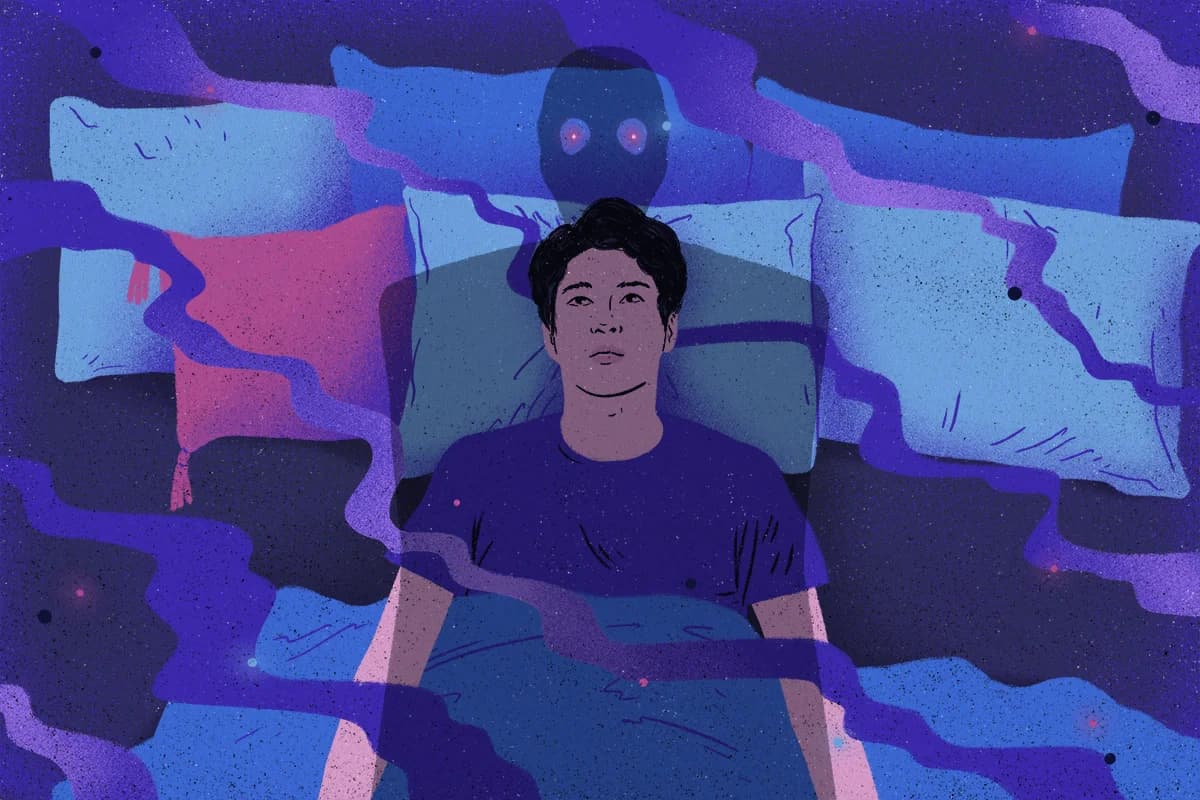
Reality shifting videos have been watched billions of times on TikTok. Many of them are made by teenagers who lie in bed, repeat a script and try to wake up somewhere else (often Hogwarts). Shifters say the practice moves your consciousness into another reality. Most of them never get there, and the ones who say they did describe something that sounds a lot like a vivid dream at the edge of sleep. Here's what reality shifting is, how the methods work, what it feels like and when it stops being harmless.
What is reality shifting?#
Reality shifting is the practice of trying to move your awareness from your current reality into a desired reality you've picked in advance (your "CR" and your "DR", in shifter shorthand). A desired reality can be close to this one, with a better job or a different family, but most are borrowed from fiction, like Hogwarts, the Marvel films or an anime such as My Hero Academia. Before trying, shifters write a script, a description of the world they want and who they'll be in it, and then use a method to get there, usually while falling asleep. Psychologists who studied the trend describe it as the experience of leaving your physical limits behind to visit other, mostly fictional, universes.[1]
The practice took off online in 2020, in the first months of the pandemic, when Google searches for it climbed sharply while searches for stress reduction stayed flat. The ideas underneath it are older. Between 2014 and 2017 a Reddit forum on "dimensional jumping" swapped methods for jumping into a better version of your own life. And the belief that your mind can rewrite your circumstances comes from New Thought, the movement behind manifestation and the law of attraction.[2] Shifters are young, too, and in a survey of 621 members of a shifting forum, three in four were between 13 and 19.
Most shifters believe the travel is literal, and the theory they lean on comes from physics, or at least from the Marvel films. In a second survey on the same forum, 82% said the multiverse explains it, which means every reality you can imagine already exists somewhere. Shifting, in that view, moves your consciousness into one of them. A much smaller group believes that reality itself is made by consciousness, so shifting would mean rebuilding it from the inside.
Why people try to shift#
For most shifters the reason is simple, and it's the same one that makes us reread a favorite book. When the forum survey asked people why they shift, letting them pick several answers, "it's fun" came first, ahead of escaping and choosing your own story.
Why shifters say they shift
Share who gave each reason, more than one allowed
- It's fun: 81%
- It's a way to escape: 69%
- I get to choose my own story: 68%
Source: Van Rijn and Van Rijn, 2024[2]. 621 members of a Reddit shifting forum, 2022.
The survey was run by shifters on one platform, so take the exact figures loosely, but the picture matches what shifters say in interviews. Many treat a desired reality like a holiday, somewhere to spend a little time before coming home, and some want to meet a character they love or learn something they can't learn here. One shifter put it this way to the researchers.
I plan to go there just to relax a bit, change spaces a bit, you know?
Escape is the other half of the story, and it's the one that worries parents. Two in three people in the same survey said shifting was a way to escape, and the posts researchers collected online mention exam stress and lives the writers said they hated.[1] That doesn't make shifting a symptom of anything, but it probably explains why the trend grew so fast during lockdowns, when many teenagers were stuck at home with a phone and a lot of time. Who wouldn't want a few hours at Hogwarts when the alternative is another week in a bedroom?
4 popular shifting methods#
Shifters swap dozens of methods, but most of them mix the same three things: visualizing the desired reality, repeating affirmations like "I am shifting", and a few minutes of meditation to relax first. Many add "subliminals", music with affirmations hidden in it, and most methods are done in bed at night. If you've searched for how to shift realities, these are the four you'll find first.
1. The Raven method#
The Raven method, perhaps the most popular of all, is done in bed at night. You lie with your arms and legs spread like a starfish, keep as still as you can and count slowly to 100. Between numbers you repeat an affirmation ("I am shifting", "I'm in my DR") and picture your first day in your desired reality in as much detail as you can, until you fall asleep.
2. The Alice in Wonderland method#
In the Alice in Wonderland method you lie on your back and imagine sitting against a tree until someone from your desired reality runs past. You chase them, fall down a rabbit hole, and at the bottom you find the key to your desired reality.
3. The pillow method#
The pillow method is the simplest of the four, since you only write your affirmations on a piece of paper, repeat them before bed and then sleep with the paper under your pillow.
4. The elevator method#
In the elevator method you imagine stepping into a lift that rises toward your desired reality on the top floor. Shifters say they feel the "energy" build as the floors go by, and when it's strong enough the doors open onto their DR.
These days most shifters mix and match, keeping the parts that work for them and dropping the rest. Some methods are done sitting up and awake, but the ones people talk about most still end in sleep, and that turns out to be the clue to what's going on.

What does reality shifting feel like?#
If you read shifters' accounts of the moment they start to shift, the same sensations come up again and again. They describe numbness, tingling, heaviness or the opposite, a weightless floating, and some feel themselves spinning, rocking or falling, or a sudden twitch through the body. Others see flashing lights, hear a buzzing or voices, or feel hot and cold rushes, and many feel sleepy.[1] In the community these are called "shifting symptoms", and people who feel them take them as a sign they're close. Shifters who say they made it describe sounds, sights and even smells from the other world, and one put it like this.
It's like an extremely vivid dream, yet it's more real than any dream I've ever had.
Almost everything on that list is also what many of us feel as we drift off on a normal night. Sleep researchers call these hypnagogic experiences, from the Greek for "leading to sleep". They're common, and in a telephone survey of nearly 5,000 people in the UK, 37% said they'd had them.[3] Most are visual, usually shapes, patterns and flashes of light, and sometimes faces or whole scenes that look lifelike, detailed and full of color. Body sensations come up in a quarter to almost half of cases, among them weightlessness, flying, falling or the feeling that someone is in the room.[4] The twitch many shifters mention is the jerk that sometimes wakes you just as you're nodding off.
So the methods make sense once you see them that way, because our brains start making pictures on their own as we fall asleep. Lying very still, keeping your mind busy with a count and a picture, and waiting for the picture to come alive is a way of watching yourself fall asleep, slowly and on purpose. If you want to know more about that in-between state, the guide to hypnagogic hallucinations covers what happens in it.
Is reality shifting real?#
The short answer is that the experience of shifting is real, but there's no sign at all that the travel is. When shifters lie in bed and see Hogwarts, they really see it, in the same way you really see the places in your dreams, and nothing about that is fake or silly. But has anyone's consciousness actually left this reality? Nothing in this world changes when someone shifts, and no shifter has come back with anything that could be checked. A claim that can't be tested either way isn't one science can confirm.
Most shifters also never get as far as the experience. In the two forum surveys, between two-thirds and four-fifths of shifters said they hadn't shifted yet, so the researchers estimate that one shifter in five at most has had a shift.[2] Forums are full of people who've tried every method for weeks and feel like failures. They're also full of "mini-shifts" (a few seconds somewhere else, or waking up in a room with a different-colored wall) that keep people going.
The psychologists who first described the trend placed shifting next to things we already know a lot about: hypnosis, deep daydreaming, lucid dreaming and getting absorbed in fiction. They describe the methods as a mix of relaxation, focused attention and self-suggestion. Their guess is that the people who report success are mostly the ones who already get lost easily in their own imagination, and who practise a lot. If you're curious where the line between a dream and waking life actually sits, how dreams resemble waking life goes into it.
Is reality shifting dangerous?#
For most people, reality shifting is a bedtime routine with a story attached, and it's no more dangerous than a vivid daydream. Therapists already use a version of it, helping patients picture a calm, safe place they can go back to when they're upset.[5] But one clinical psychologist interviewed by Business Insider said the concern starts when someone uses it more and more to escape their present life. And three former shifters told the same reporter that it went that way for them. One said she "stopped liking things" in her daily life because her desired reality was always on her mind. Another, who had depression, said shifting made her "delusional", including the belief that her soulmate lived in her DR. A third, who started shifting while depressed, compared it to something else.
The higher the euphoria, the lower the crash.
The darkest corner of the community is "respawning", the idea of shifting permanently, either by leaving a "clone" to live your life here or through death. It's a small fringe, but people have posted videos on YouTube that claim to trigger a "natural" death so you can respawn. A doctor interviewed about them said nothing in a video can cause a heart attack. In one medical case, a 15-year-old girl spent several hours a day on reality shifting and online horror content, repeating affirmations every night, and developed sudden tics and a tremor. She never managed to shift, and her symptoms faded after she deleted her TikTok account.[6] One case proves nothing about shifting in general, but the doctors who treated her thought the hours spent online may have played a part.

So how do you know when it has gone too far? If you can't stop thinking about your desired reality, if your real life feels flat next to it or you stay up late night after night trying, it's time for a break. And if you've ever thought about dying to reach your desired reality, please talk to someone today. A friend, a parent or your doctor will do, or a crisis line (in the US you can call or text 988). Lucid dreaming raises some of the same questions, and the post on whether lucid dreaming is dangerous goes through them.
Reality shifting vs lucid dreaming#
Many shifters get annoyed when people call shifting "just lucid dreaming", and the two aren't the same idea. A lucid dream is a dream in which you know you're dreaming, and shifters believe they've gone somewhere real. But in practice they're close cousins, because both happen in or near sleep, both feel completely real at the time, and both let you walk around a world you've built in your head.
The big difference between them is the evidence, since lucid dreaming has been confirmed in sleep labs, where dreamers signal with their eyes from inside the dream (the post on whether lucid dreams are real explains how). It's also common. Across 50 years of studies, 55% of people had had at least one lucid dream, and 23% had one every month or more.[7] It isn't easy to do on purpose, though. A review of the techniques found that none of them made lucid dreams happen reliably, even if some of them help.[8]
So if what you want is to walk into Hogwarts and feel the stone floor under your feet, a lucid dream is the version of shifting we know can happen. Your script already works as a dream plan (the trick has a name, dream incubation), and reality checks during the day help you notice you're dreaming once you're there. The lucid dreaming page and the 5-step plan for lucid dreaming tonight give you the rest. Read your script before bed as you always would, and keep a dream journal by the pillow. When you wake up in your own bed, which you will, the place you visited fades within minutes.
자주 묻는 질문
How do you know if you shifted realities?
Shifters say you know because you wake up in your desired reality, with its sounds, smells and people around you, and many also count smaller signs like a buzzing body or seeing repeated numbers. The catch is that a vivid dream at the edge of sleep feels exactly the same from the inside. Nothing in this reality changes, and nobody has brought back anything that could be checked, so the only proof is the memory of the experience.
Is reality shifting a form of witchcraft?
Reality shifting isn't witchcraft in the usual sense, because it uses no spells, spirits or offerings, only scripts, affirmations, visualization and meditation. Its ideas come from New Thought, the movement behind manifestation and the law of attraction, mixed with fan culture. Some shifters do combine it with tarot, astrology or crystals. Whether it fits with your own faith is a question for your tradition, not for science.
Why can't I shift realities?
Most shifters can't, so you're in the majority. In forum surveys, two-thirds to four-fifths of shifters had never shifted. Psychologists who studied the trend think the people who report success are the ones who already get absorbed easily in fantasy, daydreams or hypnosis, and who practise a lot. Trying very hard can also keep you awake, which works against methods that rely on drifting off.
What is a script in reality shifting?
A script is a written description of your desired reality: where it is, who you are there, what you look like, who your friends are and what happens on your first day. Some shifters write a few lines and trust their mind to fill in the rest, while others write pages of rules, down to their eye color. Many keep it in a notebook or a notes app and read it before trying to shift.
Can you shift realities while awake?
Some shifting methods are done awake, sitting or lying with your eyes closed, meditating and visualizing your desired reality until it feels vivid. What people describe from these sessions sounds like deep daydreaming or self-hypnosis, a state where an imagined scene takes over your attention. Most popular methods still end with falling asleep, because that's when the most vivid experiences come.



출처 및 참고 문헌
이 글은 공개된 연구와 동료 심사를 거친 논문, 믿을 만한 책을 바탕으로 썼어요. 더 깊이 알고 싶다면 아래 자료를 살펴보세요.
[1]Reality shifting: psychological features of an emergent online daydreaming culture
Somer, E., Cardeña, E., Catelan, R. F., & Soffer-Dudek, N. · 2021
Current Psychology, 42(14)
[2]Understanding reality shifting as a new online-based spiritual practice
Van Rijn, B., & Van Rijn, S. · 2024
Correspondences, 12(2)
[3]Hypnagogic and hypnopompic hallucinations: pathological phenomena?
Ohayon, M. M., Priest, R. G., Caulet, M., & Guilleminault, C. · 1996
The British Journal of Psychiatry, 169(4)
[4]What is the link between hallucinations, dreams, and hypnagogic-hypnopompic experiences?
Waters, F., Blom, J. D., Dang-Vu, T. T., Cheyne, A. J., Alderson-Day, B., Woodruff, P., & Collerton, D. · 2016
Schizophrenia Bulletin, 42(5)
[5]'Reality shifting' where users say they're transported to another life has exploded on TikTok, but former shifters say it harmed their mental health
Colombo, C. · 2022
Business Insider
[6]Functional movement disorders triggered by reality shifting and the Backrooms: another social media trap
Necpál, J., & Šoltýsová, M. · 2023
Journal of Neurology, 270(7)
[7]Lucid dreaming incidence: a quality effects meta-analysis of 50 years of research
Saunders, D. T., Roe, C. A., Smith, G., & Clegg, H. · 2016
Consciousness and Cognition, 43
[8]Induction of lucid dreams: a systematic review of evidence
Stumbrys, T., Erlacher, D., Schädlich, M., & Schredl, M. · 2012
Consciousness and Cognition, 21(3)

글쓴이
Founder of Oniri
Jean-Baptiste founded Oniri and researches dreams, lucid dreams, creativity, and AI. He collaborates with the Sleep and Cognition Neuroimaging Laboratory in Geneva and is invested in different studies about lucid dreams and the intersection of dreams and AI, including a paper in the Journal of Sleep Research on cathartic dreams.
이 글 공유하기