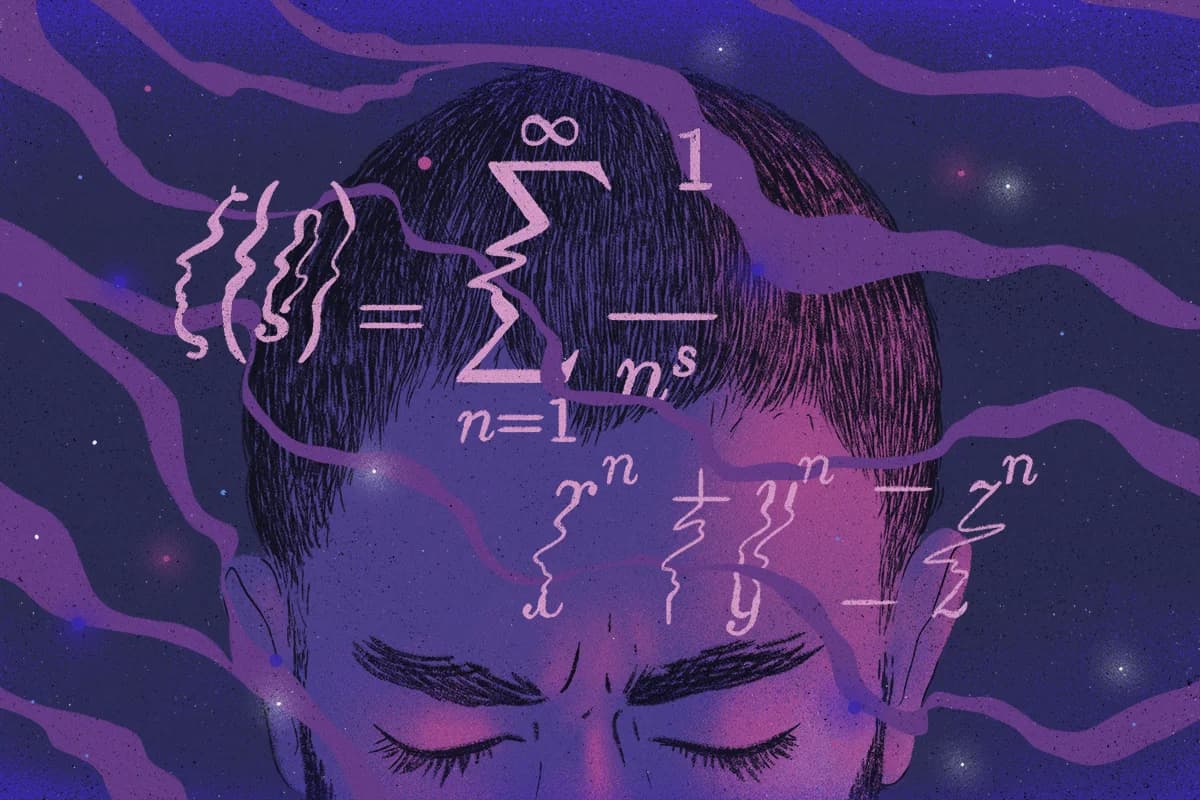
History of Dream Interpretation
Humans have tried to interpret dreams since time immemorial. The oldest evidence of dream interpretation was found on stone tablets and papyrus from ancient Mesopotamia and Egypt. Often, a wise person was consulted to interpret symbolic dreams through different rituals. In one method, for instance, called “incubation,” dreamers slept in a sacred place in expectation of a dream that would elucidate a problem for which they desired guidance.[1]
What did the ancient civilization think about dreams?#
Professional dream interpreters existed in all ancient civilizations, and it was a full-time job! In Babylonia, priests or seers told people the meaning of their dreams and how to avoid evil consequences. The Mesopotamians believed that someone who had an evil dream needed a ritual of cleansing to dissolve the dream in water. In Egypt, there were trained priests with professional competence to interpret dreams.
Greeks had numerous dream-oracles where priests interpreted the dreams of those who hoped for information about the future; the most famous is probably the one of Delphi. Greeks believed dreams did a whole bunch of things. They respected them as messages from the gods, predictions of the future, a way to cure illnesses, speak with the dead, and witness events at great distances. Last but not least of the big ancient civilizations, there were both skepticism and credulity in the Roman empire, but most Romans believed that dreams had prophetic meaning.[1]
Through centuries, many literary writings worldwide witnessed how people tried to find meaning in their dreams. In medieval Islam, people believed that dreams could be either false, pathogenic, or true. To have guidance in the interpretation of dreams, it was important to consult a Muslim scholar who knew the cultural context to investigate their causes.[2] China produced dream-interpretation manuals for centuries, all the way to Chen Shiyuan’s sixteenth-century encyclopedia on the subject. But the most famous Chinese line about dreams is far older. Around the fourth century BCE, the philosopher Zhuangzi wrote that he had dreamed he was a butterfly, and woke up unsure which way round it went: was he a man who had dreamed of being a butterfly, or a butterfly now dreaming it was a man?
Yes, mind-blowing! Maybe he was overthinking it a bit, but still fascinating, wasn’t it?
Dream interpretation today#
Today, in some traditional societies, dreams still play a central role and are interpreted in different ways. For native Americans dreams have always been a very important part of the culture. For example, the shaman of the Mohaves of California can see how to cure illnesses through dreams.[3]
In some other populations, such as the Masais of Kenya or the Aborigines of Australia, dreams are the sign of the soul wandering around the world during sleep. Among the Parintintin of South America, to dream of someone erotically means that that person is thinking about the dreamer with desire.[4] Barbadians think dreams are kind of like “studying,” i.e., thinking about something intensely. For the Jivaro of Ecuador, people acquire their souls in dreams.[5]
Towards a more scientific vision#
It would be tidy to say that cultural dream interpretation belongs to elsewhere and to the past, and that the West replaced it with science. That isn't quite what happened. Anthropologists studying dreams in contemporary America have shown that people there interpret dreams through culturally specific figures and narratives too, drawn from national ideas about mobility, self-invention and identity rather than from spirits or omens.[6] The interpretive frame changed clothes. It didn't disappear. There's even a measurable gender split in who reaches for dream-interpretation books in the first place.[7]
As you can see, worldwide dreams have always been, and are still today, a significant part of people’s life. But what about today? In the occidental world, many psychologists and philosophers have studied dreams to find a way to interpret them.[8] Those theories influenced the way dreams are seen today: they still have deep meanings for many people, and they are often used in spiritual journeys or therapy.
We explain further where dream interpretation has arrived nowadays and the main theories for using dreams in therapy in our articles: Dream interpretation 101 & Dream in therapy


Kilder og referanser
Denne artikkelen bygger på publisert forskning, fagfellevurderte studier og pålitelige bøker. Ta en titt på kildene under hvis du vil gå dypere.
[1]Dream interpretation in ancient civilizations
Hughes, J. D. · 2000
Dreaming, 10(1), 7-18
[2]The religious and cultural roles of dreams and visions in Islam
Green, N. · 2003
Journal of the Royal Asiatic Society, 13(3)
[3]Dream learning and individual ritual differences in Mohave shamanism
Devereux, G. · 1957
American Anthropologist, 59(6)
[4]Languages of dreaming: anthropological approaches to the study of dreaming in other cultures
Kracke, W. H. · 2020
Dream Images (Routledge)
[5]The new anthropology of dreaming
Tedlock, B. · 1991
Dreaming, 1(2)
[6]Figurative dream analysis and U.S. traveling identities
Mageo, J. M. · 2006
Ethos, 34(4)
[7]Reading books about dream interpretation: gender differences
Schredl, M. · 2010
Dreaming, 20(4)
[8]La nouvelle interprétation des rêves
Nathan, T. · 2011
Odile Jacob

Written by
Founder of Oniri
Jean-Baptiste founded Oniri and researches dreams, lucid dreams, creativity, and AI. He collaborates with the Sleep and Cognition Neuroimaging Laboratory in Geneva and is invested in different studies about lucid dreams and the intersection of dreams and AI, including a paper in the Journal of Sleep Research on cathartic dreams.
Share this article