Sleep Hygiene: 8 Habits for Better Sleep
Det viktigaste i korthet
- Sleep hygiene is the set of everyday habits that make good sleep more likely: when you sleep, how much light you see in the evening, how warm your bedroom is, and what you drink before bed.
- Waking up at the same time every day is the most important sleep hygiene habit, and a regular sleep schedule predicts long-term health better than the number of hours slept.
- Caffeine taken six hours before bed can still cost more than an hour of sleep, even when you don't notice the loss.
- Alcohol helps people fall asleep faster but breaks up sleep in the second half of the night and delays dreaming sleep.
- Sleep hygiene alone rarely fixes insomnia that has lasted for months, and three months of bad nights is worth raising with a doctor.
It's 1:40am. You skipped the afternoon coffee and you're still awake, working out how many hours are left before the alarm and whether it's even worth counting them.
If that sounds like your week, you've probably searched for sleep hygiene tips already and found a long list of things you should be doing. Sleep hygiene is the name for the everyday habits that make a good night more likely. The trouble with most lists is that they put the habits that help a lot next to the ones that are decoration, without saying which is which. So which of them are worth your effort, and which can you skip? And what do you do when you've tried them all and you're still awake at 1:40?
What is sleep hygiene?#
Sleep hygiene is the set of daily habits and bedroom conditions that help you fall asleep, stay asleep and wake up rested. It covers when we sleep, what our bedrooms are like, what we eat and drink in the evening and how we wind down, which is a wide brief for one word.
The term goes back to a slim booklet that a sleep psychologist, Peter Hauri, wrote for doctors in 1977, with ten rules in it.[1] There's no official version today. When researchers looked back over the field in the early 2000s they found countless variations on that first list, each one adding a rule here and dropping one there.[1] Let's be honest, no one has the time and energy to follow 50 recommendations on how to arrange your day and nights. Instead of leaving you wondering which tip actually matters, here is a shortlist of the 8 most important sleep hygiene tips, starting with the most important.
Does sleep hygiene really work?#
For the kind of bad sleep most of us mean (stressful month, too much screen time before bed), yes, it does. Each habit below has decent evidence behind it, and together they cover most of what goes wrong on an ordinary bad night. But insomnia that has dragged on for months is another matter. When it comes to solving long-term insomnia, sleep hygiene is not enough, and sleep doctors in the US are now advised not to rely on it alone.[2] Either way, try to stick to those habits, they never hurt and can only do good. But if you've slept badly for three months or more, talk to a doctor as well.
8 sleep hygiene tips, most important first#
1. Wake up at the same time every day#
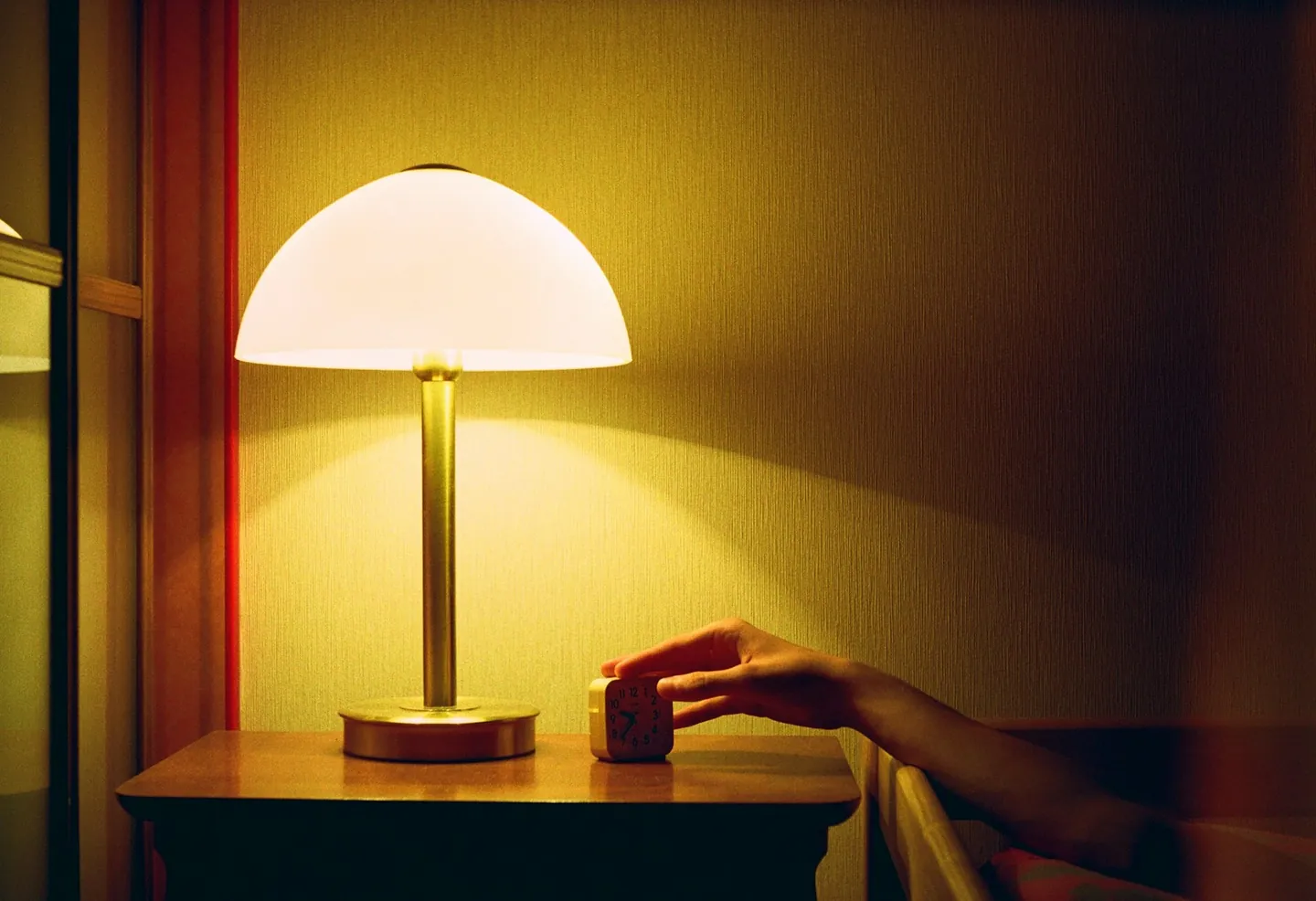
If you only change one thing, this is the one to change. Researchers tracked about 61,000 people in the UK with wrist sensors and then followed them for years. The people with the most regular sleep had a 20 to 48% lower risk of dying early than the least regular, and regularity predicted that risk better than how many hours they slept.[3] And regular doesn't have to mean strict, either. The most regular sleepers in that study fell asleep and woke up within about the same one-hour window on most days, while the least regular drifted across three hours.[3]
Start with the wake time, because it's the part you control, and keep it on weekends, even if you're tired. But by waking up at the same hour, and not "catching up" on sleep (which is a myth anyway), you'll be more likely to also go to bed at the same hour.[1]
2. Get out of bed if you can't sleep#
This one feels backwards, because getting out of bed doesn't sound like a good way to fall asleep, unless you like sleeping in the kitchen. But every night you lie in your bed awake, worrying or replaying the day, your brain learns a little more that bed is a place for being awake, or so the theory goes. You want your brain to associate bed with sleep, nothing else. So when you've been lying there for what feels like 20 minutes or so, get up. Go somewhere dim and do something dull (a paper book, a pile of laundry to fold), and come back only once you feel sleepy. No screens! Sleep doctors call this stimulus control, and it's one of the few single habits they recommend as a treatment in its own right.[2]
Give it a week or two, and expect the first few nights to feel worse, because the habit works by retraining your nights over time rather than rescuing this one. It tends to feel harder before it feels better.
3. Stop caffeine six hours before bed#
Most of us know a 9pm coffee is a bad idea, but a 4pm one can cost you sleep too, and you probably won't feel it. In one small study, healthy adults took a strong dose of caffeine (400 mg) on different nights, at bedtime, three hours before or six hours before, and slept at home wearing a sleep monitor. Even at six hours, they lost more than an hour of sleep compared with a caffeine-free night.[4] Their own sleep diaries told a gentler story, though, since at six hours they only noticed about 40 minutes of the loss.[4]
Impact of caffeine on sleep
Minutes of sleep lost after a strong dose of caffeine
- Noticed in sleep diaries
- Measured by a sleep monitor
- 54
- 65
Taken at bedtime
- 63
- 68
3 hours before bed
- 41
- 71
6 hours before bed
Source: Drake et al., 2013[4]. 12 healthy sleepers, 400 mg of caffeine.
The easy version is to avoid coffee, strong tea or energy drinks in the afternoon. Or at least, six to eight hours before your bedtime. If your bedtime moves around, so does the cut-off, which is one more reason to fix the wake time first.
4. Don't use alcohol to fall asleep#
A glass of wine does help you fall asleep faster, no one will argue with that. But once your body has cleared the alcohol, the second half of your night gets lighter and broken, and your dreams come late, whatever the dose.[5] That's the 3am wake-up after a few drinks, wide awake for no reason. So no, a nightcap is not a way to get more deep sleep, you just pay for it later. If you drink, drink earlier and lighter. And losing dream sleep has its own cost, more on that in what REM sleep does.
5. Dim the whole room in the evening#
Everyone blames the phone, but your ceiling light is not much better. In one study, an evening under normal indoor lights delayed melatonin (the hormone that tells your body it's night) in basically everyone (99%), and cut it short by about 90 minutes.[6]
So an hour or two before bed, turn off the big lights and use a lamp. Same for your phone, put it away. Or at least, turn the brightness down. And at night, your bedroom should be properly dark. Blackout curtains or a sleep mask, whichever you prefer.
6. Keep your bedroom cool and quiet#
Between the two, too hot is the real problem. A warm room means lighter sleep and more waking up, a cold one you can fix with a duvet (and no, a cold room doesn't make you sleep better in itself).[1] Most guides say around 60 to 67°F (15 to 19°C). If you wake up hot, that's the first thing to fix.
Noise is harder to catch, because it can disturb your sleep without waking you up, and you won't remember a thing in the morning.[1] If you live near a busy road, get earplugs or a white-noise machine, they're cheap.
7. Move during the day#
Exercise helps you sleep, but not as much as the fitness industry wants you to think. Across dozens of studies, people who exercised slept a bit longer, fell asleep a bit faster, and felt more rested.[7] A daily walk is enough to start. For when and how hard, see exercise and sleep.
8. Build a short bedtime routine#
Pick three or four things and do them in the same order every night, for 20 to 30 minutes. Dim the lights, brush your teeth, read a few pages, anything calm works as long as it's the same every night. After a few weeks, your body will know that sleep comes next. Keep it short, so you can still do it on a bad day. And watch what you eat in the evening, a heavy late dinner undoes all of the above.
Can you try too hard to sleep well?#
One thing most sleep hygiene lists forget to tell you, you can't force sleep. Trying hard is actually the best way to stay awake. Sleep trackers made this worse.
In 2017, sleep doctors in the US described patients who came in convinced something was wrong with them, because their watch said so. One of them spent a night in a sleep lab and was told she had slept just fine.[8] She had a question for her doctors.
Then why does my Fitbit say I am sleeping poorly?
The doctors even gave it a name, orthosomnia, the obsession with perfect sleep data. All three patients were staying in bed longer to make the number go up, which probably made their insomnia worse.[8] Later versions of the sleep hygiene list even added two rules that sound strange next to the others: never try to sleep, and get rid of the clock in your bedroom. Both are there so you stop paying attention to it.[1] So pick two habits from the list, the wake time and one other, and stick to them for a few weeks before adding more.
How to improve sleep quality when the basics aren't enough#
If you've been sleeping badly most nights for three months or more, even with good habits, go see a doctor. Long-term insomnia is common and it's treatable.
The treatment that works best is a short therapy made for sleep, CBT-I (cognitive behavioral therapy for insomnia), and it's what sleep doctors in the US recommend first.[2] Two of its main pieces you've already seen here, getting out of bed when you can't sleep, and spending less time in bed so your sleep gets deeper. The difference is that a therapist adjusts them for you, week by week.[1,2] More on this in managing insomnia with lucid dreaming training, and in how sleeping pills and other medication change your nights.

What better sleep does for your dreams#
Good sleep hygiene also changes what you dream, and how much of it you remember. Most of your dreams happen in REM sleep, and REM gets longer as the night goes on. So a short or broken night cuts into your dreams first, alcohol pushes them back, and a regular schedule protects them.[5]
Waking up at the same time every day also means you'll wake up more often in the middle of a dream, while it's still fresh. And that doesn't last, dreams fade fast once you're up. So the one morning habit to add is to catch them right away. A dream journal app lets you record a dream by voice before you've even sat up. The guide to remembering more of your dreams covers the rest, and if you dream a lot, you might want to know whether that means you slept well.
Tonight, if you're still awake long after the lights are out, don't count the hours. Get up, switch on a small lamp in another room, pick up something boring (not your phone) and wait for your eyes to get heavy, they will. The bed will still be there.
Vanliga frågor
What is the 10-3-2-1-0 rule for sleep?
The 10-3-2-1-0 rule is a viral countdown for the hours before bed: no caffeine 10 hours before, no food or alcohol 3 hours before, no work 2 hours before, no screens 1 hour before, and zero presses of the snooze button in the morning. It isn't a clinical protocol, but most of it matches what sleep research supports. The no-snooze step is the quiet star, because it protects a steady wake time.
How long does sleep hygiene take to work?
Sleep hygiene usually takes a few weeks to make a clear difference. Some changes, like an earlier last coffee or dimmer evening lights, can help within days. Others, especially a fixed wake time and getting out of bed when you can't sleep, work by retraining your body clock, and they can feel harder before they feel better. Give each change two to three weeks before you judge it.
Are naps bad for your sleep schedule?
Naps aren't bad for your sleep schedule if they're short and early. A 10 to 20 minute nap in the early afternoon can take the edge off a tired day without hurting the night. Long naps, or naps late in the afternoon, use up the sleepiness you need at bedtime. If you're struggling to sleep at night, skip naps for a while so all your sleep lands in one block.
What are examples of poor sleep hygiene?
Common examples of poor sleep hygiene are going to bed and waking up at very different times each day, drinking coffee or energy drinks in the afternoon, using alcohol to fall asleep, scrolling in bed, and sleeping in a warm or noisy room. Lying awake in bed for long stretches belongs on the list too, along with long late naps and heavy meals close to bedtime. Most people have two or three of these.
How does sleep hygiene affect mental health?
Good sleep hygiene supports mental health because sleep and mood pull on each other. Poor sleep makes stress, low mood and anxiety harder to handle, and when sleep improves, those tend to ease as well. Sleep hygiene won't treat depression or anxiety on its own. Still, a steady schedule and a calmer evening are an easy, low-risk place to start alongside any other support you have.
Is sleep hygiene the same as a bedtime routine?
No, a bedtime routine is one part of sleep hygiene. The routine covers the last half hour before bed: dimming the lights, reading a few pages. Sleep hygiene is wider. It also covers your wake-up time, your last coffee, alcohol, exercise, and how dark, cool and quiet your bedroom is. A good routine helps, but it can't make up for a 4pm espresso or a wake time that moves every day.



Källor och referenser
Den här artikeln bygger på publicerad forskning, peer review-granskade studier och pålitliga böcker. Kolla källorna nedan om du vill gräva djupare.
[1]Use of sleep hygiene in the treatment of insomnia
Stepanski, E. J., & Wyatt, J. K. · 2003
Sleep Medicine Reviews, 7(3)
[2]Behavioral and psychological treatments for chronic insomnia disorder in adults: an American Academy of Sleep Medicine clinical practice guideline
Edinger, J. D., et al. · 2021
Journal of Clinical Sleep Medicine, 17(2)
[3]Sleep regularity is a stronger predictor of mortality risk than sleep duration
Windred, D. P., et al. · 2024
Sleep, 47(1)
[4]Caffeine effects on sleep taken 0, 3, or 6 hours before going to bed
Drake, C., Roehrs, T., Shambroom, J., & Roth, T. · 2013
Journal of Clinical Sleep Medicine, 9(11)
[5]Alcohol and sleep I: effects on normal sleep
Ebrahim, I. O., Shapiro, C. M., Williams, A. J., & Fenwick, P. B. · 2013
Alcoholism: Clinical and Experimental Research, 37(4)
[6]Exposure to room light before bedtime suppresses melatonin onset and shortens melatonin duration in humans
Gooley, J. J., et al. · 2011
The Journal of Clinical Endocrinology & Metabolism, 96(3)
[7]The effects of physical activity on sleep: a meta-analytic review
Kredlow, M. A., et al. · 2015
Journal of Behavioral Medicine, 38(3)
[8]Orthosomnia: are some patients taking the quantified self too far?
Baron, K. G., Abbott, S., Jao, N., Manalo, N., & Mullen, R. · 2017
Journal of Clinical Sleep Medicine, 13(2)

Written by
Host of the Dream World Podcast
Amina has been lucid dreaming since childhood. She studied psychology at Emory University and is a member of the International Association for the Study of Dreams. In 2020 she founded the Dream World Podcast, now a community and a three-month course on lucid dreaming and consciousness.
Share this article