Different Ways to Analyze Your Dreams
Use Oniri To Help Analyze Your Dreams#
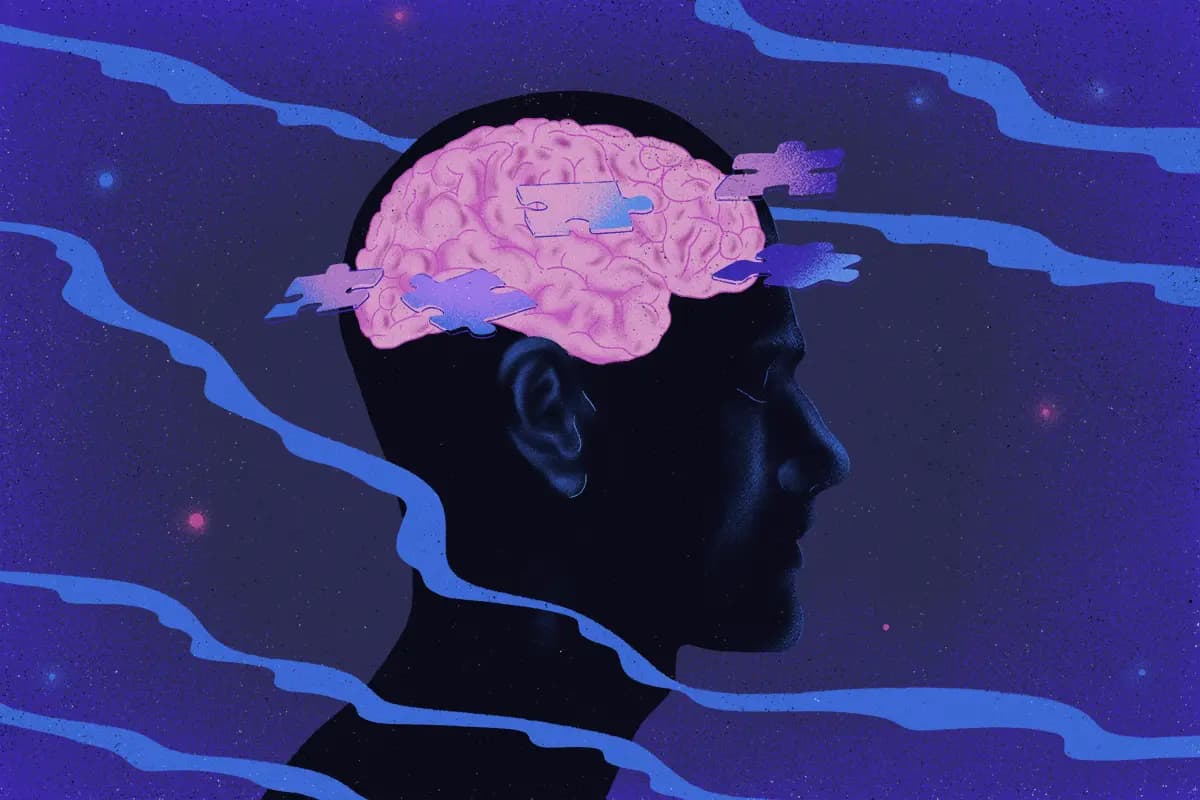
Do you ever wake up and feel puzzled by your dream? You’re not the only one. Dream interpretation is the process of assigning meaning to dreams, and there are many different approaches to doing so. For centuries, in ancient societies, dreaming was considered a supernatural communication or a means of divine intervention with powerful messages. In modern times, various schools of psychology and neurobiology have offered theories about the meaning and purpose of dreams. In this article, we will talk about a few different tools and approaches you can use when trying to dissect a dream and what it means.
Oniri can take the first pass for you. Write or speak your dream into the app, and its AI reads it back: the symbols that stood out, the emotions running underneath, the threads it recognizes from what you've already logged. It draws on over a million dreams written by the Oniri community, the largest dream database in the world. Download the app and try it on last night's dream.
This interpretation is just a suggestion based on general cultural and psychological significance. Don’t take this as absolute truth. Your dreams are linked to your experiences and memories, so we can’t tell you what your dreams mean exactly. Instead, use this as a base to start a reflection and find your own interpretations.
To interpret your dreams properly, you should ask yourself the following questions:#
- When was the last time this element appeared in your waking life? In which context?
- What does this element represent for you? Could it be a metaphor for something else?
- What emotions does this make you feel? Did you feel those emotions in your dream?
- What other related elements were inside your dream?
Quantitative content analysis#
Worth knowing about before the interpretive methods, because it is the one approach in this field with a real methodology behind it, and the one that most often gets left out of articles like this.
Rather than asking what a dream means, content analysis asks what is measurably in it. Working from the system developed by Calvin Hall and Robert Van de Castle, researchers count characters, social interactions, aggressions, friendly acts, emotions, settings and misfortunes across a series of dreams, then compare the profile against established norms or against the same person over time.[1]
It's less romantic than symbol interpretation and considerably harder to fool yourself with. It also produces genuinely surprising results: analyses of long individual dream series show that a person's dream profile is remarkably consistent over years, and that accurate inferences about someone's waking concerns and relationships can be drawn from dream content alone. Over 22,000 dream reports sit in the public DreamBank archive if you'd like to see what the raw material looks like.[2]
You can borrow the idea without the apparatus. Instead of asking what last night's dream meant, go back through twenty entries in your dream journal and count: who appears, how often you're the one acting versus the one things happen to, how many dreams end badly. Patterns you'd never notice one dream at a time show up immediately.
Delaney’s Dream Interview Method#
The purpose of this method is to form various associations with each dream symbol using an interview model.[3] Most of the time, you will play both the parts of dreamer and interviewer, but if you can find a partner to interview you using the interview steps. The purpose of the questions is to describe the dream symbols as if you were explaining them to someone from another planet. For example, if someone dreams of a motorcycle, you may ask them "What is a motorcycle like? What does it do? Pretend I come from another planet, or have been asleep for a hundred years, and have never heard of such a thing." This will allow the dreamer to really think deeply about what the symbol is and how they view it. Dream symbols within a particular dream can be classified as any of the following:
- SETTINGS
- PEOPLE
- ANIMALS
- OBJECTS
- FEELINGS
- ACTIONS/PLOTS
This approach is centered around what the dreamer feels about the components of the dream. Comparing someone’s husband to a bear only works if we know what that dreamer thinks of polar bears. Do they think they are scary, remote, and dangerous? Or do they think of them as endangered, strong, and good providers? Fluffy and cute? To get the good out of the personal metaphors you create while dreaming, it is crucial to know what you or your dreamer thinks and feels about any image or action.
This is the most important step in the interview upon which everything else depends. Dreamers are often delightfully surprised to discover what they say in response to the alien's interviewer's questions
Note: When asking someone the dream interview questions to help another person analyze their dream, resist the temptation to fill in the descriptive words for the dreamer and give them suggestions. This will not help them but discourage them from feeling around inside to find the best word and most accurate word. It is often helpful to ask the dreamer to give 3-4 adjectives that describe the image or action. This method emphasizes allowing the dreamer to come to their own conclusion, no matter how spot on your interpretation may be.
The interviewer now asks the dreamer if there is anything in his life, any part of himself, or anyone in his life like the thing described. Use the dreamer’s own words for the description of the symbol. If the dreamer cannot bridge the image or scene to something in his life, return to the first step and get a richer description, or ask deeper questions. The interviewer may want to ask more questions to get the dreamer to think more deeply about the dream symbols and form more free associations.
You may want to ask questions clarifying the narrative of the dream, the behavior of dream characters. The purpose of the questions is simply to ask and allow the dreamer to answer for themselves. The interviewer should not suggest any answers or possible meanings. The interviewer can also ask about how the dreamer felt in the dream. For example: “What were you feeling at that moment in the dream?” “(If the dreamer is stuck guess very general terms.) Were you pleased, displeased? Anxious, relieved, frustrated, perplexed, certain?” (Always give opposites so you don't seem to express an opinion. If the dreamer accepts your word for a feeling, ask for elaboration).
The dream interview is transparent, logical, and teachable to most people. However, its simplicity can be misleading; it takes practice to learn. It can be useful to have the dreamer discover their own meanings in their own words.
Jungian Analysis#
Jungian analysis is similar to Freud's psychoanalysis in that dreams are probed for unconscious material and symbols are explored for hidden meaning. However, in Jungian dream analysis, the dreamer is more crucial in unlocking the dream's message.[4] Dreams are seen as attempts to express and create rather than efforts to repress and disguise, as in Freud's theory. Start off by writing down your dreams immediately upon awakening. Record any symbols and also your “internal talk” and emotions while dreaming the dream. The next step is to make associations. Think of the dream image and then write down everything that comes to mind.[5] The associations may feel random or silly at first. Do this for every dream detail you wrote down in your journal. Just like when reading mythology, dreams are not meant to be interpreted literally.
The language of dreams and the unconscious is the symbolic image. Jung believed that the unconscious borrows images from your external environment to symbolize things in the dream. Another aspect of Jungian dream analysis is amplification. The idea is to reach beyond the personal content to the wider implications of the dream symbols. It helps to consider archetypal themes so that we are able to understand a dream and what it may be trying to communicate to the dreamer. Amplification goes beyond using just the individual's associations; it explores the collective understanding of the symbol to help the individual find meaning in the dream. Jung's early understanding of the collective unconscious was that it consisted of primordial images that were, to a large degree, consistent across cultures.
“I have noticed that dreams are as simple or as complicated as the dreamer is himself, only they are always a little bit ahead of the dreamer’s consciousness. I do not understand my own dreams any better than any of you, for they are always somewhat beyond my grasp and I have the same trouble with them as anyone who knows nothing about dream interpretation. Knowledge is no advantage when it is a matter of one’s own dreams.” -Carl Yung (1935)


Lähteet ja viitteet
Tämä artikkeli perustuu julkaistuun tutkimukseen, vertaisarvioituihin tutkimuksiin ja luotettaviin kirjoihin. Katso alla olevat lähteet, jos haluat syventyä aiheeseen.
[1]The content of dreams: methodologic and theoretical implications
Domhoff, G. W. · 2005
In Kryger, M. H., et al. (eds), Principles and Practice of Sleep Medicine (4th ed.), W. B. Saunders
[2]Studying dream content using the archive and search engine on DreamBank.net
Domhoff, G. W., & Schneider, A. · 2008
Consciousness and Cognition, 17(4)
[3]Breakthrough Dreaming: How to Tap the Power of Your 24-Hour Mind
Delaney, G. M. V. · 1991
Bantam
[4]Understanding Dreams in Clinical Practice
West, M. · 2019
Routledge
[5]Inner Work: Using Dreams and Active Imagination for Personal Growth
Johnson, R. A. · 2009
HarperOne
[6]Figurative dream analysis and U.S. traveling identities
Mageo, J. M. · 2006
Ethos, 34(4)

Written by
Founder of Oniri
Jean-Baptiste founded Oniri and researches dreams, lucid dreams, creativity, and AI. He collaborates with the Sleep and Cognition Neuroimaging Laboratory in Geneva and is invested in different studies about lucid dreams and the intersection of dreams and AI, including a paper in the Journal of Sleep Research on cathartic dreams.
Share this article