How to Stop Nightmares: Causes and Practical Tips
We know from experience that enduring recurring nightmares is exhausting. We understand how waking up with a racing heart and a mind tangled in fear can steal little bits of joy from your following day. If you are stuck in a relentless cycle of recurrent nightmares that have left you yearning for positive dreams and peaceful nights, we are here to help.
The great news is that you do not need to suffer! With the right tools and assistance, you can conquer your dream content and learn how to have fewer nightmares.
In this comprehensive guide, we unravel the mysteries of recurring dreams, explore tangible solutions you can implement at home, and discuss when to see a professional. Most of all, we help you return comfort to your sleep, confidence to your nights and take the next step toward dream mastery.
Negative Dreams: Nightmares vs. Night Terrors#
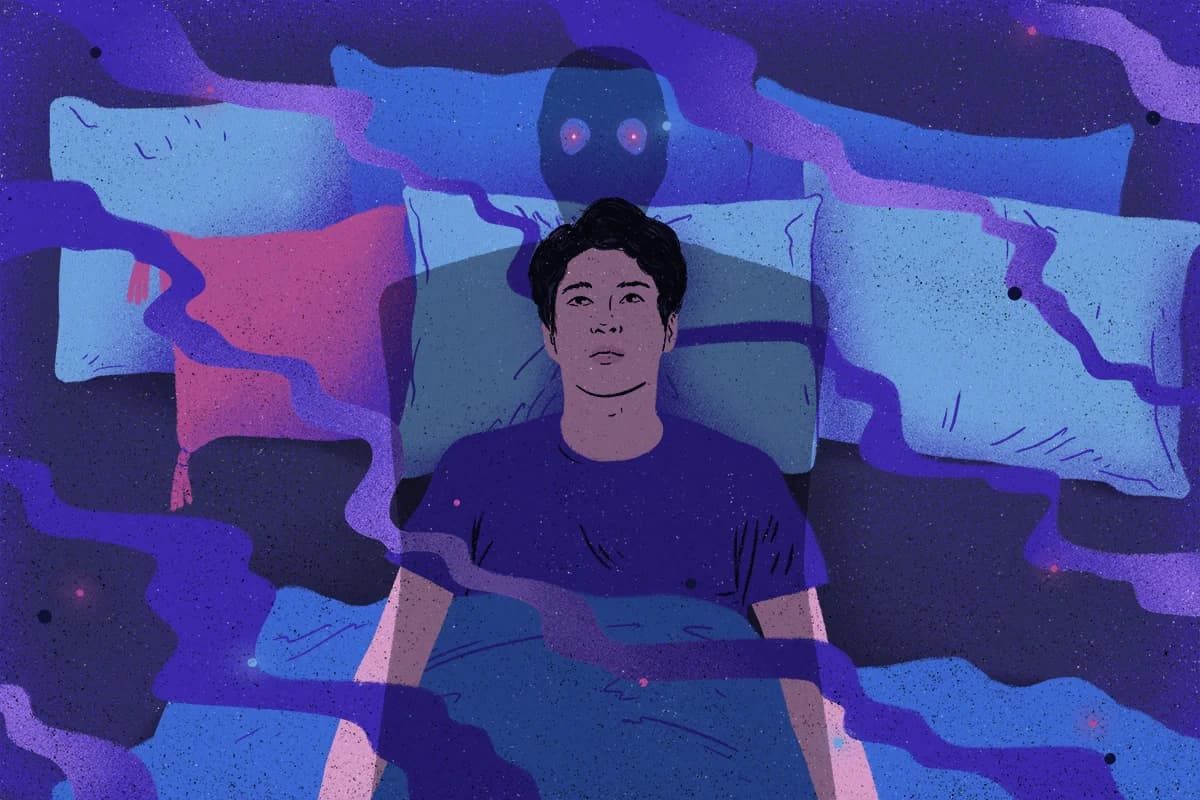
Disturbing dreams come in two distinct forms. The first is nightmares. According to the DSM 5 (AKA the backbone of modern psychology), nightmares are well-remembered, extended dreams involving threats to our survival, security, or physical integrity.[1] They mainly occur during REM and may plunge us into intense fear, sadness, or anxiety. Nightmares center around themes that leave us emotionally raw upon waking. When you wake up from a nightmare, you become oriented and alert. These disturbances link strongly to stress, anxiety, medication, and substance abuse.
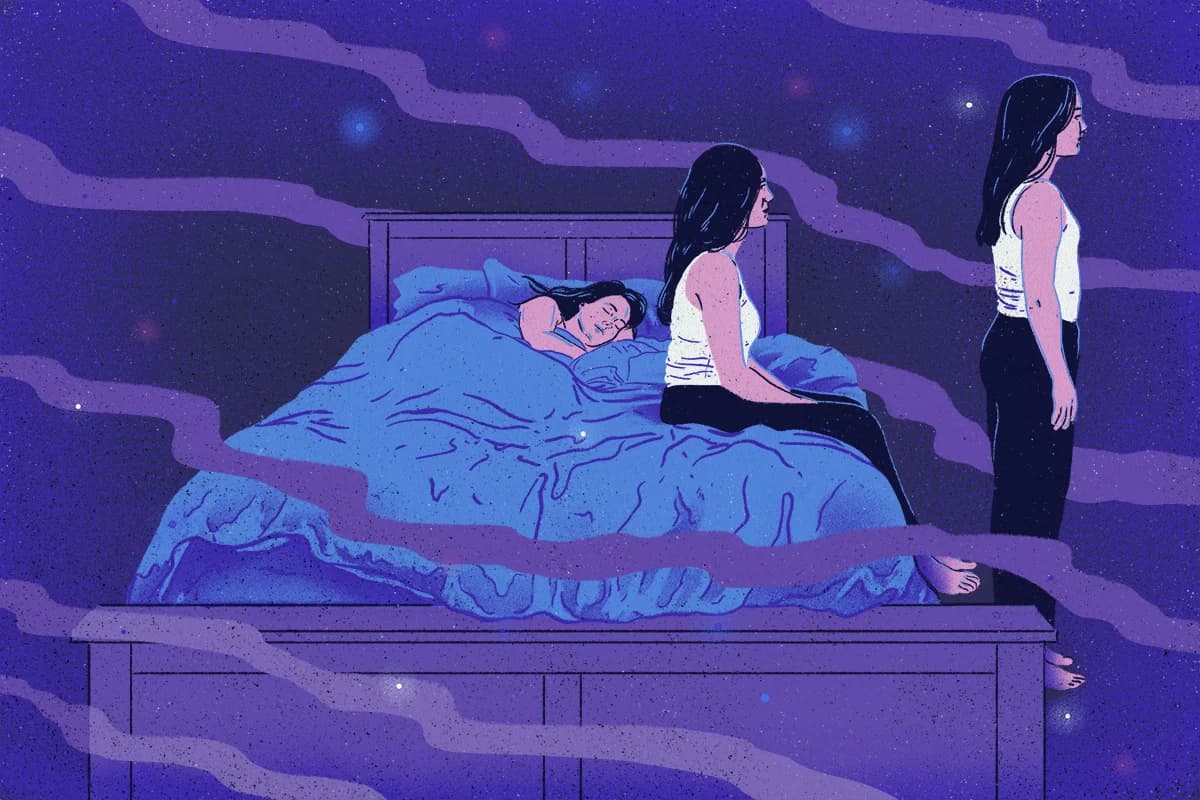
By contrast, Night terrors occur during non-REM sleep in the night's first half. Unlike nightmares, you will not fully wake up, and you may experience intense fear. Picture thrashing in bed or even screaming. Night terrors in adults are often a symptom of PTSD, psychiatric diagnoses, burnout, and sleep deprivation.[2]
You'll often read that night terrors leave no memory at all. In children that's usually true. In adults it isn't. When researchers interviewed 43 adults referred for severe sleepwalking and sleep terrors, 71% could recall at least one dreamlike scene tied to an episode, and what they described matched what their body had been doing.[3] A second study found the same thing more strongly still: over 90% of sleepwalkers remembered an enacted dream, and around 70% of those dreams involved a threat, typically a misfortune or disaster bearing down on them.[4]
So if you wake from something violent in the first half of the night and you do remember a fragment, you're not misremembering it. That's the normal adult pattern.
How frequent nightmares are, and how they take hold#
Two things are worth knowing before the practical part.
First, you're not an outlier. In a community study of 8,558 adults, 5.1% had nightmares at least once a week.[5] Frequent nightmares are uncommon enough to be worth treating and common enough that you are nowhere near alone in having them.
Second, chronic nightmares are not simply "stress showing up at night". The current consensus explanation is an interaction between two things: elevated hyperarousal, a nervous system that stays switched on, and impaired fear extinction, a reduced ability to learn that a frightening thing is no longer dangerous. Trauma, early childhood adversity, a tendency to suppress unwanted thoughts, and sleep-disordered breathing all feed into that loop.[6,7]
That framing matters because it tells you what actually helps. If the problem is a fear that never gets unlearned, then the fix is not avoiding the nightmare. It's giving your mind a different ending to rehearse.
So, what can we do to improve our sleep routine and dream experience?
Preparing for Peaceful Sleep#
Achieving restful nights, free from recurring unpleasant dreams, is an art. And just like in painting, how well you prepare your canvas matters. Adequate sleep hygiene, or how you prepare for bed, is how you prepare your canvas and determine the quality of your dream function.
To reduce nightmares, we can prepare for pleasurable dreams with simple yet powerful interventions like:
- Avoiding screen time an hour before bed to minimize media impact on your dream content
- Sleeping in a cooler room
- Having a sleep schedule and sticking to it
However, nightmares are not always harmful. They also help us resolve conflicts that our waking minds cannot. Therefore, they are immensely valuable and we do not want to remove them altogether. Instead, we want to edit out those damaging our sleep hygiene and overall health.
There are many more easy interventions you can begin with to improve your general dream content. So take a moment and check out our article on Tips For Better Sleep for a more detailed look.
How To Combat Frequent Bad Dreams#
In the whirlwind of daily life, stress intricately weaves itself into the fabric of our dreams. As that stress settles, our minds try to cope, increasing the likelihood of nightmare issues.
Stress alone doesn't explain it, though. A survey of 846 people from the UK general population set out to find what predicts nightmares beyond negative mood, since plenty of people under strain sleep fine. Worry came out as a factor in its own right, alongside experiences like depersonalisation and hallucinatory experiences.[8] So the useful question isn't only "am I stressed" but "what am I turning over and over."
Our experience of stress is complex and is caused by psychological, biological, and environmental factors.
To soothe your system, you need to address all three. Luckily, if you practice good sleep hygiene, you are probably already addressing the environmental factors. Next, you need to ask yourself: Am I experiencing unresolved anxiety, trauma, or other difficult emotions? Have I been caring for my physical well-being?
If you are at a loss on what to do next, here are a few effective avenues to try at home:
- Keeping a dream journal becomes a portal for comparison. It allows us to unveil common elements or themes within recurring dreams. The more insight we have into ourselves, the more likely we can naturally reframe our nightmares.
- Meditation reduces stress and anxiety, which are common triggers for nightmares and negative health habits. Regular meditation regulates the amygdala, the part of the brain associated with fear and the chief suspect in your scary dreams.[9]
- Purposeful relaxation (like listening to a bedtime story podcast or calming music) reduces nervous system activation. Signaling to your body, you are safe to sleep.
- Breathing techniques help manage anxiety strikes if you wake from a nightmare. They lower heart rate and blood pressure, helping you fall asleep into pleasant dreams.
What nightmares are usually about#
It helps to know the shape of the thing. Researchers collected 9,796 dreams from volunteers keeping logs for weeks at a time, then analysed the 253 nightmares and 431 bad dreams among them.
Physical aggression was the single most common theme in nightmares. Bad dreams, the milder cousin, were dominated instead by interpersonal conflict: arguments, rejection, being let down. Nightmares were also more bizarre, and contained more failures and unhappy endings.
The finding that surprises people most: fear isn't the main emotion as often as you'd think. 35% of nightmares and 55% of bad dreams had a primary emotion other than fear, most often sadness, guilt or anger.[10] If you wake up from something that left you grieving rather than terrified, that still counts, and it's still worth writing down.
Understanding the emotions and symbols behind your bad dreams can also bring relief; Oniri can help you understand what your dreams mean by decoding their symbols, emotions and recurring themes. Even without pinpointing your biggest nightmare triggers, these steps help to liberate you from distressing dreamscapes.
Imagery Rehearsal Therapy: the treatment with the most evidence behind it#
If you take one thing from this article, take this one. The American Academy of Sleep Medicine reviewed the evidence on every treatment for nightmare disorder in adults, behavioural and pharmacological, and Imagery Rehearsal Therapy is the only one it lists as recommended. Nightmare disorder affects roughly 4% of adults, and IRT is the front-line answer to it.[11]
It's also unglamorous enough that you can start it today:
- Write the nightmare down. The whole thing, as you remember it.
- Change it. Anywhere you like, but change the ending in particular. You're not required to make it happy, only different. The monster turns out to be your neighbour. The road doesn't end at the cliff.
- Rehearse the new version. Five to twenty minutes a day, awake, picturing the rewritten dream. Not the old one.
That's it. You are giving your mind a competing script and practising it until it's the one that comes to hand. Most protocols run a few weeks, and it works on the nightmare itself rather than on your sleep hygiene around it.
Two notes. IRT is usually delivered by a therapist, and if your nightmares stem from trauma you want it that way rather than alone. And newer work is testing whether rehearsing the rewritten dream in virtual reality makes it land harder, which is promising but early.[12]
An alternative tool to escape recurrent nightmares is lucid dreaming. Lucid dreaming teaches you not only to survive your nightmares but also how to take control of your dreamscape.
Lucid Dreaming Therapy: Take Control of Your Dreams#
A dream study, Lucid Dreaming Treatment for Nightmares, looked into lucid dreaming treatment (LDT) on chronic nightmares. Twenty-three participants with chronic nightmares for at least six months were randomly assigned to either the LDT group or the control group. The LDT group received a two-hour session of lucid dreaming training, while the control group did not.
The results?
LDT significantly reduced nightmare frequency and distress and increased general well-being.[13] While research is ongoing, this study showed that LDT can be an effective treatment for chronic nightmares.
Being able to lucid dream, then, is having the superpower to alter the course of a nightmare, transforming fear into empowerment. To lucid dream, you need to identify your biggest nightmare triggers. Once you have recognized recurring dream patterns, you can use them as a trigger for achieving lucid awareness: a dance of control within the dream itself.
The best part? Lucid dreaming is a skill you can learn for a more liberated dream experience. Check out How to Have Lucid Dreams to learn more.
When Do You Need Professional Help with Recurring Nightmare?#
If you are trying our techniques and still feel no better, it is time to reach out for professional support. While we can often self-guide through dream journaling, stress management techniques, and excellent sleep hygiene, sometimes we need more help.
Treating underlying mental health conditions is essential to having fewer recurring nightmares since nightmares are often a sign of something broader happening in your psyche. Engaging with a licensed therapist and talking about the thoughts and emotions that trigger your nightmares can help end them. As well as reduce your overall associated anxiety
There's a harder reason to take this seriously. Frequent nightmares are an independent risk marker for suicide. A Finnish study followed 71,068 people over four decades and found the association held even after accounting for war experience, which had been the obvious confound in earlier work.[14] The same community research found that people with frequent nightmares were several times more likely to have a psychiatric disorder, mood disorders most of all.
None of that means a bad week of dreams is an emergency. It means persistent nightmares are a real clinical signal rather than a nuisance to be tolerated, and they're worth bringing to a doctor in their own right, not only as a footnote to something else. If you're having thoughts of harming yourself, please reach out to a crisis line in your country today.
Other possible causes can be medications, medical disorders, or trauma history. If you have any other symptoms that started around the same time as your nightmares, you are not alone and deserve help finding your way back to health.
This is because Nightmares and Night Terrors alike can be a sign of much deeper medical and psychological imbalances. Including ineffective medications, temporal lobe epilepsy, sleep apnea, and heart disorders. They are also hallmark presentations of post-traumatic stress disorder (PTSD), anxiety disorders, depression, bipolar disorder, and even schizophrenia.[15]
Post-traumatic stress disorder can be caused by a traumatic event, including a time when there was a threat of severe injury or death to yourself, known as Trauma (big T). Notably, C-PTSD, or complex post-traumatic stress disorder, can also be caused by any situation in which you feel intense, prolonged exposure to events that are extremely threatening. These situations lead to intense feelings of fear, helplessness, and significant distress in situations and result in trauma (little t).
Trauma treatment is an entire subsection of Clinical psychology that clinicians train years in to have the skills necessary to guide patients.
Professionals will be able to look at your dream content and nightmare issues holistically and:
- Give you an accurate diagnosis and treatment plan.
- Carry out therapies like Cognitive Behavioral Therapy (CBT) and Imagery Rehearsal Therapy (IRT) to reframe negative thought patterns and the causes of stress and anxiety contributing to your nightmares.
- Discuss underlying factors like depersonalization, hallucinatory experiences, and paranoia, in a safe, non-judgmental space to decrease the severity of your nightmares.
Conclusion#
If your nightmares cast a shadow over bedtime, it's time to address them so that you can rest.
To learn how to have fewer nightmares, we first need to appreciate that our recurring dreams, filled with familiar faces and recognizable signs, offer a unique window into our subconscious. Scary dreams are a natural and essential part of how our minds resolve the stressors in our lives. To have fewer nightmares, we must confront them, understand them, and learn to interact with them. Only then will our dreams enable our recovery, and only then can we enjoy an introspective sleep experience.
So, are you ready to embark on a journey into your dream world? Download the Oniri app and start recording your dreams, analyzing them, and learning lucid dreaming. The app has plenty of tools to help you in this journey. Good luck exploring your dreams and if you need help, we're here!



出典・参考文献
この記事は、公開された研究や査読付きの論文、信頼できる書籍をもとに書いています。もっと知りたいときは、下の参考文献をのぞいてみてください。
[1]Diagnostic and Statistical Manual of Mental Disorders (5th ed.)
American Psychiatric Association · 2013
doi.org
[2]A brief review of sleep terrors, nightmares, and rapid eye movement sleep behavior disorder
Haupt, M., Sheldon, S. H., & Loghmanee, D. · 2013
Pediatric Annals, 42(10)
[3]Dreamlike mentations during sleepwalking and sleep terrors in adults
Oudiette, D., et al. · 2009
Sleep, 32(12)
[4]Fight or flight? Dream content during sleepwalking/sleep terrors vs rapid eye movement sleep behavior disorder
Uguccioni, G., et al. · 2013
Sleep Medicine, 14(5)
[5]Prevalence and correlates of frequent nightmares: a community-based 2-phase study
Li, S. X., et al. · 2010
Sleep, 33(6)
[6]Aetiology and treatment of nightmare disorder: state of the art and future perspectives
Gieselmann, A., et al. · 2019
Journal of Sleep Research, 28(4)
[7]The stress acceleration hypothesis of nightmares
Nielsen, T. · 2017
Frontiers in Neurology, 8
[8]Nightmares in the general population: identifying potential causal factors
Rek, S., Sheaves, B., & Freeman, D. · 2017
Social Psychiatry and Psychiatric Epidemiology, 52(9)
[9]Correlates and treatments of nightmares in adults
Hasler, B. P., & Germain, A. · 2009
Sleep Medicine Clinics, 4(4)
[10]Thematic and content analysis of idiopathic nightmares and bad dreams
Robert, G., & Zadra, A. · 2014
Sleep, 37(2)
[11]Position paper for the treatment of nightmare disorder in adults
Morgenthaler, T. I., et al. · 2018
Journal of Clinical Sleep Medicine, 14(6)
[12]Virtual reality-enabled treatment of nightmares
McNamara, P., et al. · 2018
Dreaming, 28(3)
[13]Nightmares and PTSD
U.S. Department of Veterans Affairs · 2014
National Center for PTSD
[14]Nightmares as predictors of suicide: an extension study including war veterans
Sandman, N., et al. · 2017
Scientific Reports, 7
[15]Trauma and Dreams
Barrett, D. · 2001
Harvard University Press

Written by
Founder of Oniri
Jean-Baptiste founded Oniri and researches dreams, lucid dreams, creativity, and AI. He collaborates with the Sleep and Cognition Neuroimaging Laboratory in Geneva and is invested in different studies about lucid dreams and the intersection of dreams and AI, including a paper in the Journal of Sleep Research on cathartic dreams.
Share this article